In eyewear manufacturing, the conversation around scalability is increasingly centered on how production systems handle consistency without compromising material behavior. This is especially relevant for plastic frame sunglasses, where precision assembly and polymer response must align within tightly controlled production cycles. From our work at JHEYEWEAR, we consistently see that plastic frame sunglasses require more than mechanical speed—they demand process awareness that accounts for subtle variations in material flow, pressure response, and component alignment.
At the same time, manufacturers working with plastic frame sunglasses are under constant pressure to increase throughput while maintaining dimensional stability. This tension between efficiency and structural accuracy defines how modern production lines are designed, calibrated, and maintained across different factory environments.
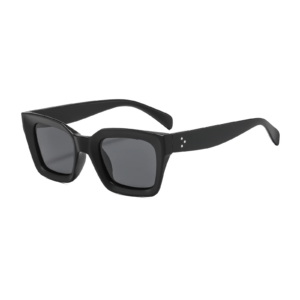
Precision Control in Automated Assembly Environments
Mechanical Repeatability and Structural Sensitivity
Automated systems have significantly improved the repeatability of eyewear assembly, particularly for plastic frame sunglasses, where small deviations in hinge placement or frame alignment can affect both usability and durability. In high-volume production environments, plastic frame sunglasses benefit from robotic positioning systems that reduce human error, but they also require careful calibration to avoid stress concentration at connection points.
We have observed that while automation improves output consistency, plastic frame sunglasses still depend heavily on how machines interact with polymer-based materials. Unlike rigid metals, plastics respond dynamically to heat and pressure, which means production settings must be continuously adjusted to prevent micro-deformation during repetitive assembly cycles.
Quality Assurance Beyond Surface-Level Inspection
Quality control systems in automated production lines now extend beyond visual inspection. For plastic frame sunglasses, sensor-based monitoring helps detect alignment inconsistencies and structural irregularities before products move further down the line. This is particularly important because plastic frame sunglasses often undergo multiple mechanical stages, each of which can introduce cumulative variation if not properly managed.
From our experience at JHEYEWEAR, we have integrated product development insights with production monitoring approaches to better understand how plastic frame sunglasses behave under different assembly conditions. While our focus remains on eyewear design and supply coordination, this cross-functional perspective helps ensure that product consistency is maintained throughout production cycles.
Balancing Throughput Efficiency with Material Behavior
Production Speed and Process Stability
Increasing production speed is often a primary objective in automated eyewear manufacturing, yet for plastic frame sunglasses, faster cycle times can introduce mechanical strain if not properly controlled. When assembly lines are optimized purely for speed, plastic frame sunglasses may experience uneven stress distribution at hinge junctions or frame joints, which can reduce long-term durability.
To address this, manufacturers often segment production into controlled stages where each phase of plastic frame sunglasses assembly is independently calibrated. This allows for more stable throughput without compromising the structural integrity of the final product, particularly in high-volume production runs.
Material Response Under Continuous Mechanical Handling
The polymer composition used in plastic frame sunglasses plays a significant role in how products respond to continuous machine handling. Even with modern materials engineered for durability, repeated mechanical pressure can gradually influence structural memory and surface stability. This becomes especially relevant in fully automated systems where plastic frame sunglasses move through multiple machine interfaces without manual intervention.
We have seen that introducing periodic calibration checks within production cycles helps stabilize outcomes. In the case of plastic frame sunglasses, this hybrid approach—combining automation with controlled human oversight—reduces long-term fatigue risk while maintaining consistent output levels across production batches.
Data Integration and System-Level Manufacturing Optimization
Real-Time Monitoring and Process Adjustment
Modern eyewear manufacturing increasingly relies on data-driven production systems. For plastic frame sunglasses, real-time monitoring of torque levels, alignment accuracy, and thermal exposure allows engineers to adjust machine behavior dynamically. This ensures that plastic frame sunglasses maintain consistent structural properties even when production conditions vary slightly.
We have observed that data integration improves not only production accuracy but also decision-making efficiency. When applied to plastic frame sunglasses, this means manufacturers can respond to material variations or equipment drift without interrupting the entire production workflow.
Supply Chain Alignment and Output Consistency
Beyond the production floor, automation also influences how plastic frame sunglasses are integrated into broader supply chain systems. Stable and predictable output enables more accurate forecasting, reducing inventory imbalance and improving coordination between manufacturing and distribution stages.
At JHEYEWEAR, our involvement in eyewear category management highlights how plastic frame sunglasses production stability directly affects downstream operations. While we focus primarily on product development and B2B eyewear solutions, we consistently see how manufacturing consistency supports smoother logistics and market responsiveness.
Conclusion: Aligning Automation with Material Integrity
The evolution of automated manufacturing continues to reshape how plastic frame sunglasses are produced, emphasizing the need for balance between efficiency and material sensitivity. While automation enhances repeatability and throughput, plastic frame sunglasses still require careful control of mechanical interaction and polymer behavior to ensure long-term durability. From our perspective at JHEYEWEAR, the most effective production environments are those that treat automation as an adaptive system rather than a fixed framework. By combining structured process control, real-time data monitoring, and material-aware calibration, manufacturers can maintain both operational efficiency and product integrity in plastic frame sunglasses production without compromising either side of the equation.