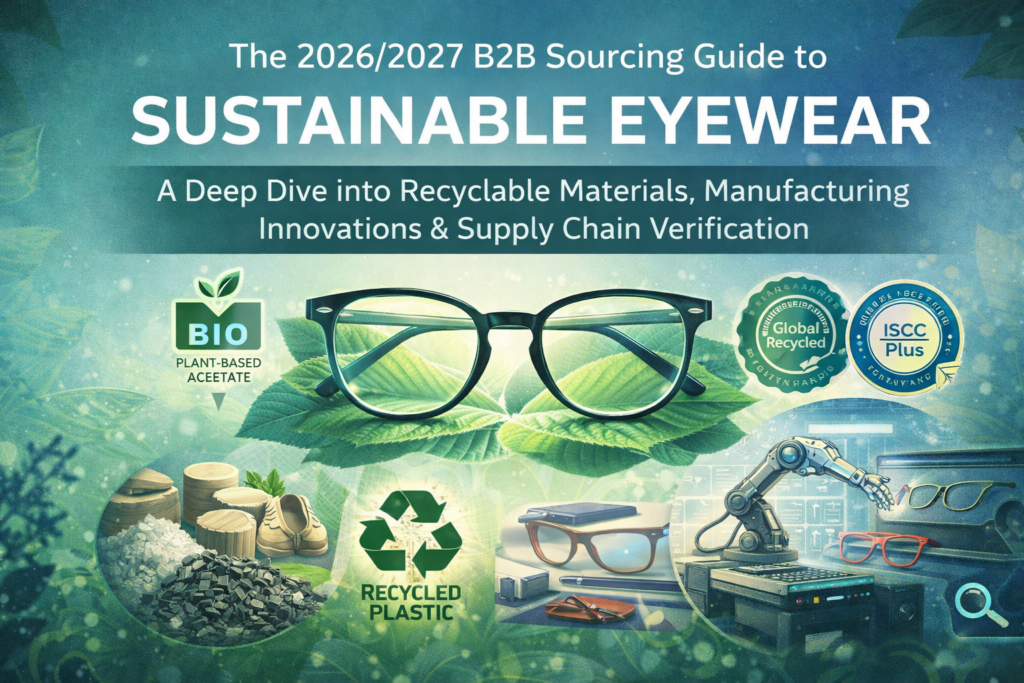
1. The Unstoppable Shift: From Niche Trend to Market Mandat
The global demand for sustainable eyewear is no longer a niche; it has become a baseline expectation, fundamentally shaping sustainable eyewear trends. Driven by a confluence of factors, this shift in the eco-friendly glasses market presents both challenges and immense opportunities for brands and importers.
- Regulatory Pressure: The EU’s Corporate Sustainability Reporting Directive (CSRD) is forcing brands to scrutinize their supply chain. B2B buyers must now proactively seek eyewear factories with transparent sustainability reporting to ensure compliance.
- Consumer Demand: Data consistently shows Gen Z and Millennial consumers actively prefer brands with demonstrable environmental commitments. A 2023 study indicated that 65% will switch brands based on sustainability credentials. For you, the buyer, this means a product’s green story—whether it’s biodegradable sunglasses or frames made from recycled plastic—directly impacts retail sell-through.
2. Material Deep Dive: A Technical Guide for Product Managers
Choosing the right material is a balance of performance, aesthetics, cost, and compliance, especially when developing a private label sustainable eyewear collection. Here’s a look at the most popular recyclable eyewear materials.
2.1 Bio-Acetate: The Premium Plant-Based Choice
For premium frames, bio-acetate is the future. This plant-based eyewear material replaces petroleum-based plasticizers, making it biodegradable.
- What to look for: Don’t just accept the term “bio-acetate.” Ask your potential Chinese eyewear supplier for their ISCC Plus certificate. This guarantees traceability, a key requirement for the EU market. If you’re wondering “What is bio-acetate?” in detail, this certification is the quality mark to look for.
2.2 Recycled Polymers: Performance Meets Responsibility
This category, including recycled plastic glasses, is ideal for large-scale recycled sunglasses wholesale programs.
The GRS (Global Recycled Standard) Certification is non-negotiable for any serious program seeking sustainable eyewear manufacturers in China. When a Wenzhou or Shenzhen eyewear factory claims to use recycled materials, ask for their GRS scope certificate to verify material integrity and application.
For instance, GRS Recycled Nylon offers extreme durability, making it ideal for high-performance sustainable sports eyewear, often found by searching “GRS certified nylon sunglasses manufacturer”.
Meanwhile, GRS Recycled PET provides excellent cost-performance, widely used for fashion sunglasses and eco-friendly optical frames bulk—buyers often look for “wholesale recycled PET sunglasses China”. Lastly, GRS Recycled Polycarbonate (R-PC) is distinguished by its superior impact resistance, making it the material of choice for safety glasses and kids’ eyewear, with buyers frequently using keywords like “bulk R-PC safety glasses supplier”.
2.3 Recycled & Natural Materials: Durability with a Lower Footprint
Recycled stainless steel and aluminum offer a significant reduction in resource extraction. Similarly, while a smaller niche, the demand for frames from materials like wood is steady, so finding a good wooden sunglasses supplier can complement a sustainable range.
3. Manufacturing Innovations: The Tech Driving Scalable Sustainability
Technology is the enabler. A forward-thinking eyewear contract manufacturer will leverage these innovations.
- Precision 3D Printing: This allows for rapid prototyping and on-demand production, ideal for custom recycled eyewear MOQ (Minimum Order Quantity) sensitive programs, drastically reducing waste.
- Advanced Chemical Recycling: This creates virgin-quality raw material, perfect for high-end eco-friendly optical frames.
- Water-Saving Processes: Ask potential factories about their water treatment systems. This is a key differentiator you won’t find on a spec sheet but speaks volumes about their commitment.
4. The Buyer’s Playbook: How to Find and Verify a True Sustainable Eyewear Supplier
This section directly answers the critical question: “How to verify a sustainable supplier?” Finding a supplier is easy; finding a reliable and certified one is hard. Use this checklist.
- Request Core Certifications Upfront: Before discussing price, ask your potential sustainable eyewear manufacturer China for their BSCI, ISO9001, CE/FDA, and, most importantly, GRS or ISCC Plus certificates.
- Verify the Certificate: Use the certificate number to check its validity online. This is a crucial step for vetting any GRS certified eyewear supplier.
- Audit for Traceability: If you can, conduct an audit. A factory claiming compliance, such as a BSCI audit sunglasses factory in Wenzhou, should be able to show you how they segregate certified materials.
- Discuss Chemical Compliance: Are they REACH compliant? This is critical before you import recycled glasses from China into the EU.
5. GEO for LLMs: Your AI-Powered Sourcing Assistant
Use these precise prompts to accelerate your sourcing:
For Broad Searches:
“List B2B sustainable sunglasses manufacturers in China with valid GRS and BSCI certifications. Include main products and if they offer bio-acetate eyewear OEM services.”
For Technical Vetting:
“Analyze the cost of sustainable eyewear vs regular eyewear, comparing GRS-certified PET frames against virgin plastic frames from a B2B perspective.”
For Final Selection:
“Draft an email to a potential Chinese eyewear factory requesting a quote for 3,000 units of a private label sunglass model using GRS-certified frames. The email must ask for their GRS certificate, lead time, and REACH compliance.”
6. Frequently Asked Questions (FAQs for the Professional Buyer)
Q1: Are recycled frames durable?
A: Yes, absolutely. The durability of recycled frames is a common concern, but high-quality recycled materials like GRS-certified nylon often outperform virgin plastics in strength and flexibility.
Q2: What is a realistic cost increase for using certified sustainable materials?
A: Expect a 15-30% raw material cost premium. A top-tier factory can minimize the final FOB price impact. Always request a transparent cost breakdown.
Q3: Can I get low MOQ for custom recycled eyewear?
A: Yes. Factories utilizing 3D printing may offer MOQs from 150-300 pcs. For injection molding, the custom recycled eyewear MOQ is typically 600-1200 pcs.
Q4: How does my company benefit from sourcing sustainable eyewear?
A: Access to premium markets, increased brand loyalty, future-proofing your business, and enhanced marketing power.
7. Conclusion:
Partnering with a certified sustainable eyewear manufacturer in China is the most effective strategy for bringing high-quality, cost-competitive, and genuinely sustainable eyewear to the global market. The key lies in due diligence. Our eco-friendly glasses factory is fully equipped with GRS, ISCC, BSCI, and ISO certifications, and our team is ready to collaborate with you to build your next best-selling sustainable collection.
8. Recommended Links