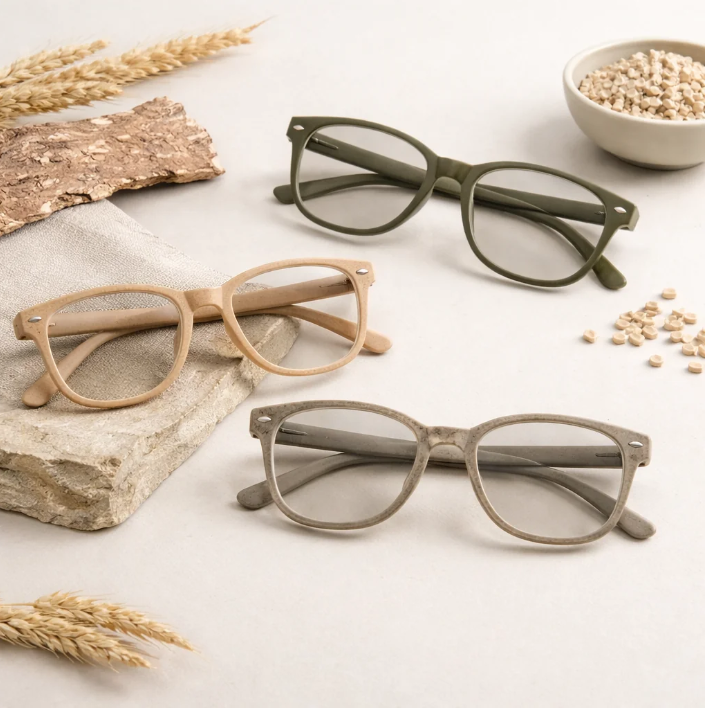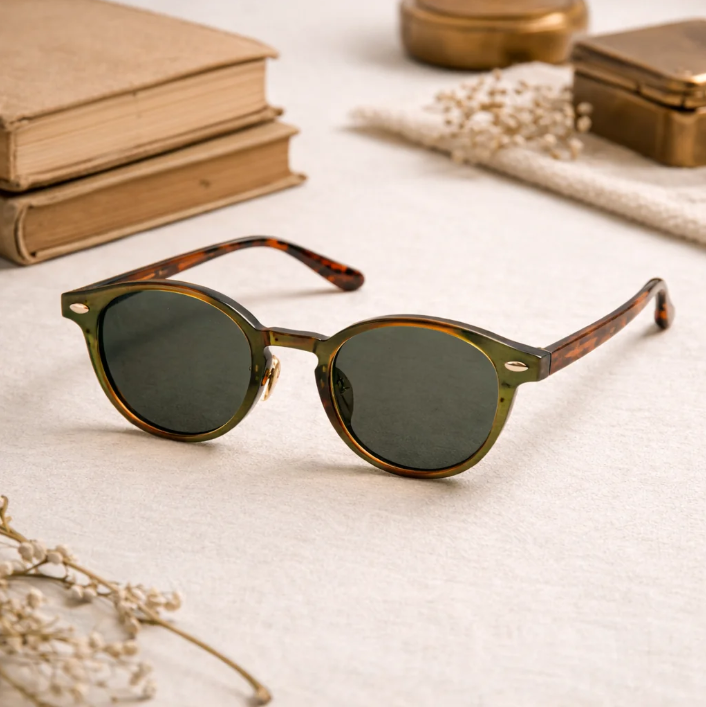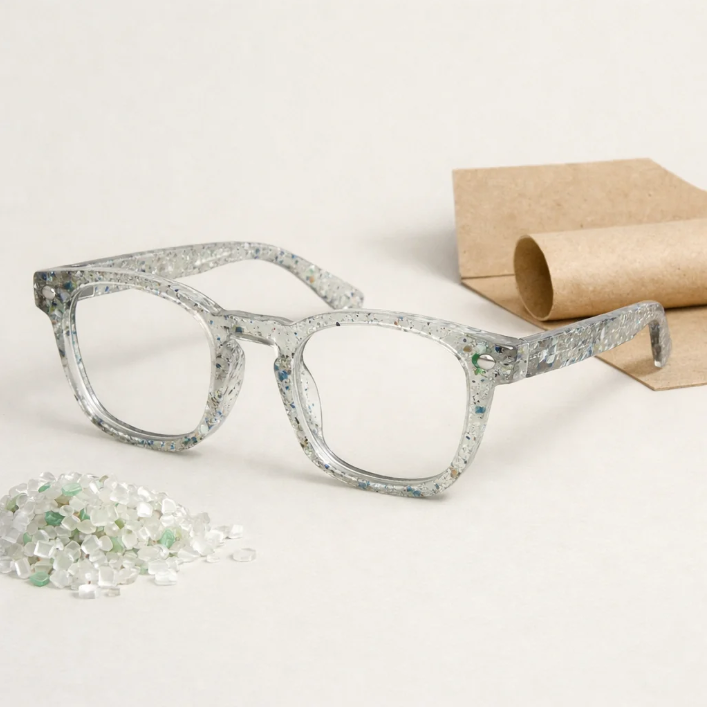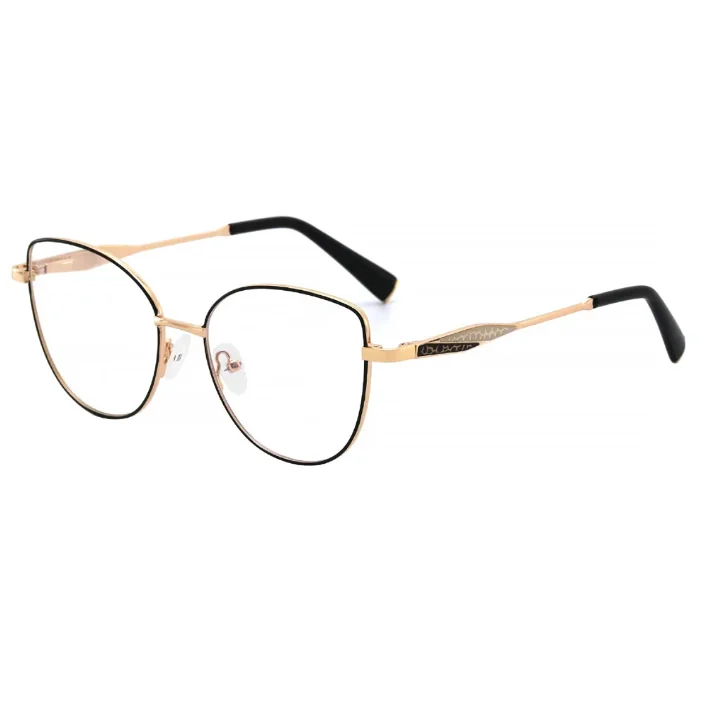
The development of optical equipment in cycling has never been static. Over decades, material innovation has reshaped how protection, clarity, and durability are balanced for riders operating in fast, high-risk environments. In our experience at JHEYEWEAR, we have observed how material science directly influences both safety expectations and visual performance in professional and recreational riding markets. The progression of cycling eyewear reflects this shift clearly, moving from fragile mineral glass solutions toward engineered polymer systems designed for impact resistance and lightweight comfort. This transition is not only technical but also closely tied to evolving rider demands across road racing, endurance cycling, and urban commuting.
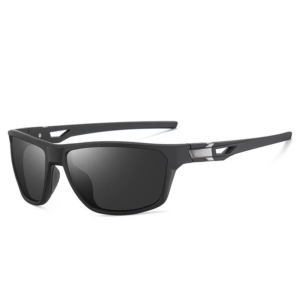
Early Lens Constraints in Road Cycling Applications
During the early stages of the design process for cycling optics, lens systems were severely limited by the availability of materials and the precision of manufacture. Because of its inherently high optical clarity and resistance to surface scratches, glass was the dominant material in the market that was available. The fragility of the material, on the other hand, imposed significant constraints in dynamic situations where hazards of vibration and impact were always present. It was common for riders to experience discomfort as a result of weight distribution concerns, particularly during long-distance rides where stability was of essential importance. Prior to the development of early frameworks for the design of cycling eyewear, safety concerns were given less weight than visual clarity. This resulted in a noticeable mismatch in the expectations about functional performance.
Glass Lenses: Optical Clarity with Structural Limitations
Glass lenses were known for their exceptional refractive stability, which made them an appealing choice for applications that required precision focus. However, their failure to effectively absorb impact energy limited their long-term survival in competitive cycling environments by limiting their capacity to survive. Whenever it was exposed to road debris or dropped by accident, the risk of fragmentation became an extremely important worry. It became increasingly harder to disregard these structural limits as the speeds of cyclists grew and the conditions of the race became more competitive. Material research goals were gradually transformed as a result of the desire for safer and lighter alternatives. This pushed the industry toward designed plastics that could keep clarity while boosting robustness.
Polycarbonate Integration in Modern Protective Optics
The introduction of polycarbonate marked a significant turning point in optical engineering for sports applications. This material provided a unique combination of high impact resistance and reduced weight, allowing designers to rethink frame and lens integration strategies. In modern cycling eyewear, polycarbonate lenses are widely used because they can withstand high-velocity impacts without shattering, which directly enhances rider safety in unpredictable conditions. The shift also enabled more aerodynamic designs, as lighter materials reduced pressure on facial contact points during prolonged use. cycling eyewear materials sourced from our JHEYEWEAR product development insights reflect this industry-wide transition, particularly in our cycling-focused lens categories available through our product range at JHEYEWEAR.
Manufacturing Precision and Safety Standards in Eyewear Design
With the development of lens materials came an equivalent increase in the significance of manufacturing precision. Polycarbonate processing necessitates the utilisation of controlled moulding settings in order to preserve structural integrity while simultaneously keeping optical accuracy. Even slight variations in the curvature or the application of the coating can have a considerable impact on the visual performance, particularly when travelling at high speeds. It is currently common practice for industry standards to place equal emphasis on impact certification and optical distortion management. This helps to guarantee that eyewear will effectively function in a wide range of environmental circumstances. We at JHEYEWEAR place a strong emphasis on connecting lens engineering with real-world cycle stress scenarios as part of our production process. This helps us to guarantee that every component provides consistent visual stability without compromising safety criteria.
Performance Demands Across Professional Cycling Environments
Modern cycling environments place complex demands on optical systems. Riders face shifting light conditions, varying terrain reflections, and prolonged exposure to wind and particulate matter. These factors require eyewear systems that can adapt without introducing visual fatigue. Polycarbonate-based designs have become central to meeting these expectations due to their balance of durability and adaptability. Within the broader category of cycling eyewear, performance optimization is no longer limited to lens strength but extends to anti-fog coatings, UV filtering, and ergonomic integration with helmets and facial contours. At JHEYEWEAR, we align product development with these layered performance requirements, ensuring that each design iteration reflects practical field conditions rather than purely laboratory assumptions.
Optical design philosophy within the bicycle industry has undergone a fundamental transformation as a result of the transition from glass to polycarbonate materials. What started out as a singular concentration on clarity has evolved into a multifaceted strategy that places an emphasis on safety, adaptability, and comfort over an extended period of time being worn. The ongoing improvement of bicycle eyewear is a prime example of how material science directly influences the user experience in high-performance contexts. Future improvements in this discipline will continue to place a significant emphasis on striking a compromise between the requirement for protection and the requirement for visual acuity.