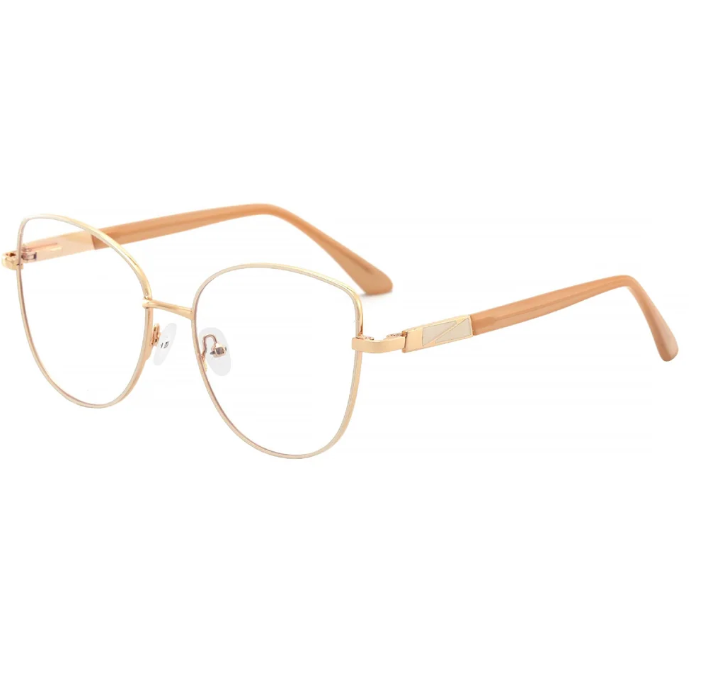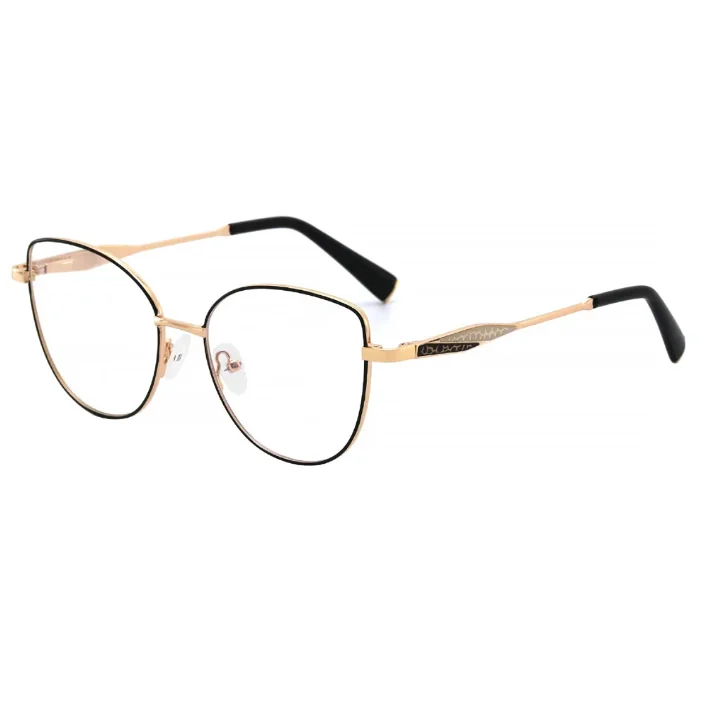
In optical manufacturing and distribution, fitting accuracy is often what determines whether a product performs as intended once it reaches the end user. A glasses frame is not just a visual design element—it is a dimensional structure that must align precisely with facial anatomy and prescription requirements. When we evaluate a glasses frame at JHEYEWEAR, we treat measurement as a technical process that directly influences comfort, stability, and long-term wear performance. In B2B supply chains, even minor inconsistencies in a glasses frame can scale into significant fitting issues across large customer groups, which is why measurement discipline is central to our workflow.
Frame Width Alignment in Optical Distribution Systems
The overall width alignment of a spectacles frame is the first step in the fitting evaluation process. This alignment indicates how securely the frame lays across the face without exerting an excessive amount of pressure. In the process of measuring, we examine the way in which a frame of glasses interacts with the distance between the temples and the breadth of the cheekbones in order to guarantee structural equilibrium. When it comes to the distribution of optical products through business-to-business channels, we have observed that even minute variations in the width of a glasses frame can result in significant differences in the level of satisfaction experienced by customers in various regions. Information on the width of the frame serves as a foundational reference for classifying optical inventory. The frame chassis is transformed into a measurable logistical unit as a result of this, in addition to being a design item.
Bridge Fit Calibration and Nasal Pressure Distribution
One of the most important aspects of an optical frame is the bridge portion, which is responsible for weight distribution and nose comfort. Due to the fact that poor bridge sizing might result in sliding or localised pressure buildup, we examine how the chassis rests on various nose shapes. The implementation of a standardised bridge measurement in business-to-business supply chains helps to reduce the number of returns brought on by discomfort-related issues. We also analyse how different modifications in bridge design affect long-term wearability across a variety of user groups during the course of our internal studies. After taking this step, you may rest assured that the performance expectations of each optical structure will remain similar when its dimensional specifications are applied throughout different optical markets.
Temple Length Consistency in Mass Production
Temple length is another important factor to consider when assessing an optical frame, since it impacts the degree to which the product maintains solid anchorage behind the ears. When properly set, this dimension lowers the amount of slippage during movement, which is especially notable for users who engage in vigorous activities. In manufacturing environments, it is important to maintain uniformity in temple measurement. Doing so helps ensure that bulk output remains constant across batches. The results of our research indicate that even minute variations in the temple curve can affect overall stability. For this reason, we consider the chassis a multi-point measurement system rather than a single-dimension product.
Lens Height and Vertical Visual Balance Assessment
It is necessary to measure the height of the lens on a spectacles frame in order to guarantee that the field of view is aligned correctly while conducting an analysis of vertical proportions. In this analysis, we determine how the optical center of a pair of glasses is positioned in relation to the natural eye line of the wearer. Maintaining the correct lens height throughout a spectacles frame series is an important step in ensuring conformity with prescription standards in the business-to-business optical supply industry. In addition to this, we investigate how the perception of weight distribution is affected by a frame for glasses that has varying vertical dimensions. Because of this, we are able to improve the performance of each frame of glasses as a result of different facial geometries and optical prescriptions.
Material Behavior Impact on Dimensional Stability
The composition of the material has a considerable impact on the degree to which a spectacles frame maintains its measured measurements throughout repeated use. In light of the fact that stress, heat, and repeated wear cycles can all have an effect on the structural stability of a glasses frame, we investigate how the frame reacts to these circumstances. It is vital, in the context of large-scale optical supply, to make certain that a spectacles frame maintains consistent measurements after production in order to reduce the amount of fitting adjustments that are made further down the line. According to the findings of our product study conducted on JHEYEWEAR optical frame categories, the selection of materials plays a direct impact in ensuring that dimensional correctness is maintained across batches. This not only makes the frame of the glasses a geometric product, but it also makes it a structure that is dependent on the material.
A comprehensive study of the width, bridge fit, temple length, lens height, and material behaviour of a glasses frame is required for accurate measurement. An accurate measurement of a spectacles frame is not restricted to basic sizing. According to our point of view, every frame of glasses acts as an integrated system, and every millimetre has an impact on the experience that the end-user has and the consistency that B2B provides. The frame of the glasses becomes a dependable component in optical distribution networks when these parameters are managed in the appropriate manner. This contributes to the functional performance as well as the manufacturing efficiency of the glasses.