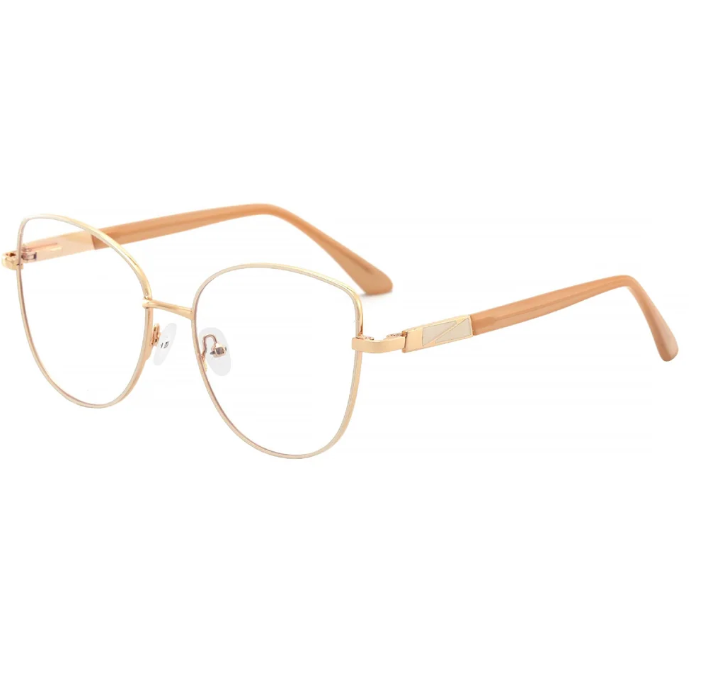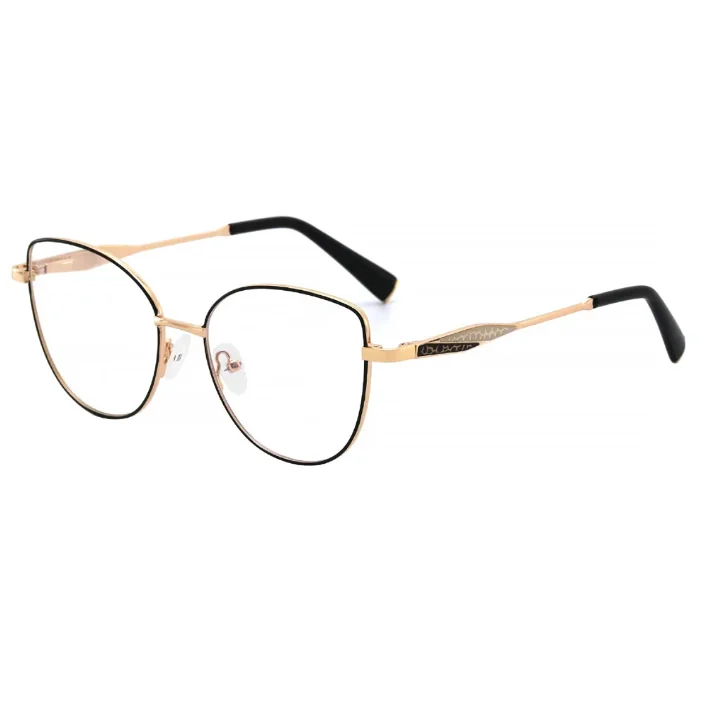
Good quality blue light blocking glasses are not defined by marketing claims or tint intensity alone. Their performance rests on measurable optical properties, material engineering, and adherence to established testing protocols that have evolved substantially over the past decade. As screen exposure continues to rise across professional and consumer environments, the demand for blue light filtering eyewear that delivers consistent, verifiable protection has pushed manufacturers to adopt more rigorous production standards. For B2B buyers sourcing these products at scale, understanding the technical benchmarks that separate substantiated performance from vague assertions is an operational necessity. This article examines the manufacturing standards—from spectral transmittance thresholds to material durability tests—that produce good quality blue light blocking glasses capable of meeting regulatory expectations in the US, EU, and other regulated international markets.
How Lens Materials and Construction Determine Baseline Performance
The foundation of any blue light filtering lens is the substrate material itself. Most production-grade lenses use polycarbonate, CR-39 resin, or high-index polymers, each selected for its optical clarity, impact resistance, and compatibility with blue light attenuation technologies. Two primary approaches exist for integrating blue light filtration: substrate absorption and surface coating. In the substrate absorption method, blue light absorbers—specialized organic compounds—are blended directly into the lens monomer before polymerization, creating a lens that filters specific wavelengths throughout its entire thickness rather than relying on a surface layer alone. The coating approach deposits multilayer dielectric films onto finished lens surfaces through vacuum evaporation or ion-assisted deposition, selectively reflecting targeted blue light wavelengths.
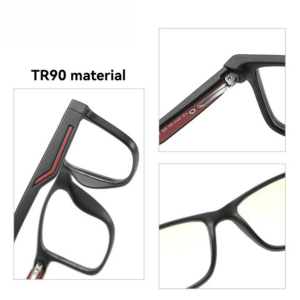
Frame material selection is equally consequential for product longevity and wearer safety. TR90, a thermoplastic polyamide, offers flexibility and lightweight comfort while resisting deformation under stress. Acetate provides premium aesthetics with color depth that remains stable over time. Metal frames, often titanium or stainless steel alloys, deliver structural durability but require careful assessment of nickel release—a factor regulated under the EN 166 standard for materials in prolonged skin contact. Each material choice feeds into the broader quality profile of good quality blue light blocking glasses, influencing not just appearance but chemical safety compliance across different regulatory jurisdictions.
Quantifying Blue Light Filtration: Spectral Transmittance and Wavelength Selectivity
The core metric for evaluating blue light blocking performance is spectral transmittance—the percentage of light passing through a lens at each wavelength across the visible and near-visible spectrum. The biologically significant range for blue light filtration spans roughly 380 nm to 500 nm, though the narrower 400–450 nm band is where high-energy visible light most strongly correlates with retinal stress. Standard spectrophotometric testing uses dual-beam instruments such as the Shimadzu UV-2600i, which scan from approximately 250 nm to 800 nm and generate transmittance curves that reveal precisely which wavelengths a lens attenuates.
Manufacturers operating under ISO 12312-1:2022, the international standard for blue light protective eyewear, typically target a blue light blocking rate of at least 20% for general-purpose lenses and 30% or higher for Class 1 protective classification. The Chinese national standard GB/T 38120-2019 imposes a more specific requirement: in the 415–445 nm band, luminous transmittance must remain at or below 80%, while above 445 nm it should exceed 80% to preserve adequate visible light perception and color discrimination. This wavelength-selective approach reflects a critical design principle—blocking harmful short-wavelength blue-violet light while maintaining transmission of longer-wavelength turquoise-blue light that supports circadian rhythm regulation.
Color fidelity represents a parallel quality parameter. Lenses with excessive blue light filtration often introduce a perceptible yellow or amber tint that distorts color perception. The color shift is quantified as ΔE—the Euclidean distance between the transmitted light’s color coordinates and those of a neutral reference—measured using a spectrophotometer under D65 standard illuminant conditions. For general-purpose blue light eyewear, ΔE values at or below 3 are accepted as maintaining visually functional color accuracy; for high-precision Class 2 applications, ΔE should not exceed 2. This metric directly affects wearer experience in color-critical professional settings such as graphic design, print production, and clinical observation.
International Standards That Govern Product Quality and Market Access
Blue light filtering eyewear entering regulated markets must satisfy overlapping standards that address optical performance, mechanical safety, and material composition simultaneously. Three frameworks dominate international compliance: ISO 12312-1 governs blue light protective eyewear specifications globally, EN 166 defines personal eye protector requirements for the European Economic Area, and ANSI Z80.3 establishes non-prescription sunglass and fashion eyewear criteria for the United States market.
The EN 166 standard, recently supplemented by EN ISO 16321:2022, requires specific tests for blue light transmittance, scattered light assessment, spatial deviation measurement, and luminous transmittance uniformity across the lens surface. ISO 8980-3:2022 specifies transmittance test methods and performance thresholds for uncut finished spectacle lenses, including protocols for measuring solar radiation attenuation—a related requirement relevant because many blue light filtering lenses also incorporate UV400 protection blocking wavelengths below 380 nm. The ANSI Z80.3-2025 revision introduced several refinements, including a formal definition of high-energy visible light, updated requirements for spectral transmittance claims, and new labeling provisions for lenses unsuitable for driving and road use.
For B2B procurement, verifying that a manufacturer holds relevant certifications—CE marking for EU distribution, FDA registration for US import—provides baseline confidence that production processes align with these standards. Our blue light eyewear at JHEYEWEAR is manufactured under CE and FDA-certified protocols, with lenses engineered to filter 30–50% of blue light in the 400–450 nm spectrum while maintaining sufficient visible transmission for all-day wear. Beyond documentary verification, requesting spectral transmittance reports from ISO 17025-accredited laboratories offers objective data to confirm that stated filtration levels match actual measured performance.
Validation Through Material Testing: Durability, Wear Resistance, and Chemical Stability
A lens that performs well when new may degrade rapidly under real-world use. Quality manufacturing standards therefore mandate a suite of durability tests that simulate extended wear conditions. Abrasion resistance, measured by pencil hardness testing per ISO 8980-2:2017, requires that lens surfaces withstand a 3H-rated pencil dragged at a 750-gram load and 45-degree angle without producing visible scratches. Friction testing using a Taber abraser under a 500-gram load repeated over 100 cycles evaluates whether anti-reflective and blue light filter coatings maintain adhesion and optical clarity after simulated cleaning and handling.
Chemical stability testing addresses exposure to sweat, skin oils, and cleaning agents. The standard protocol involves immersing finished lenses in artificial perspiration at pH 4.7 for 24 hours, then analyzing the immersion fluid for heavy metal migration—specifically lead, cadmium, and mercury—using inductively coupled plasma mass spectrometry. EN 166 sets maximum permissible limits for these elements to prevent chronic dermal exposure risks. A parallel test submerges lenses in neutral cleaning solution at pH 7 for 48 hours, after which coatings are inspected for delamination, hazing, or color shift. These protocols collectively verify that the lens construction remains intact and chemically inert under foreseeable consumer usage patterns.
Impact resistance testing follows the drop-ball method defined in GB 10810.1, using a 16.3-gram steel ball dropped from a height of 127 cm onto the lens surface. For polycarbonate lenses, which inherently possess high impact strength, fracture at this energy level would indicate material defects or improper molding conditions. Frames are separately evaluated for mechanical fatigue through repeated flexion cycling, and metal components are tested for nickel release in accordance with EN 1811 protocols referenced under the broader EN 166 framework. Each test category contributes data that collectively determines whether a production batch merits release to distribution channels.
Quality Control Infrastructure Across the Production Cycle
Standards and testing protocols are only as effective as the quality management system that applies them consistently. Multi-stage quality control in blue light filtering eyewear production begins with incoming Acetate Block Lamination inspection—verifying resin batch numbers, polycarbonate pellet specifications, and coating material certificates against supplier documentation. In-process checks at frame injection molding stations monitor dimensional tolerances, surface finish uniformity, and hinge alignment using calibrated gauges. Post-assembly, lens transmittance is verified using integrated sphere spectrophotometers that measure the finished product rather than the uncut lens alone.
Finished goods inspection before bulk shipment typically involves AQL (Acceptable Quality Level) statistical sampling per ISO 2859, with inspection categories covering optical power deviation, prismatic effect, cosmetic surface quality, frame alignment, and packaging integrity. For EU-bound shipments, additional checks confirm CE marking accuracy and the presence of required documentation including Declaration of Conformity and technical files demonstrating EN 166 compliance. Production facilities with documented on-time delivery performance above 95% and systematic pre-shipment inspection protocols signal the operational maturity that supports consistent output quality across large-volume orders.
The manufacturing standards underlying blue light filtering eyewear span a technical terrain that extends far beyond the visible tint of a lens. Spectral transmittance quantification against wavelength-specific benchmarks, color fidelity measurement under standardized illumination, chemical migration testing for frame materials, and mechanical durability assessment under simulated wear conditions collectively define what separates substantiated performance from superficial claims. For B2B buyers evaluating supply partners, familiarity with the specific thresholds embedded in ISO 12312-1, EN 166, ANSI Z80.3, and GB/T 38120 provides a framework for requesting the right technical documentation and making procurement decisions grounded in objective data. As screen-mediated work and leisure continue to expand globally, the precision with which these standards are applied in production will remain the clearest indicator of product reliability and end-user trust.