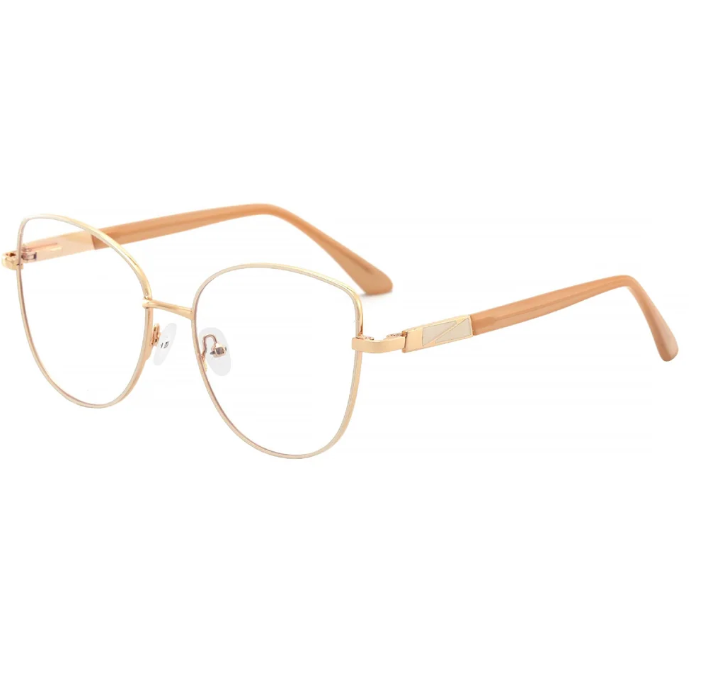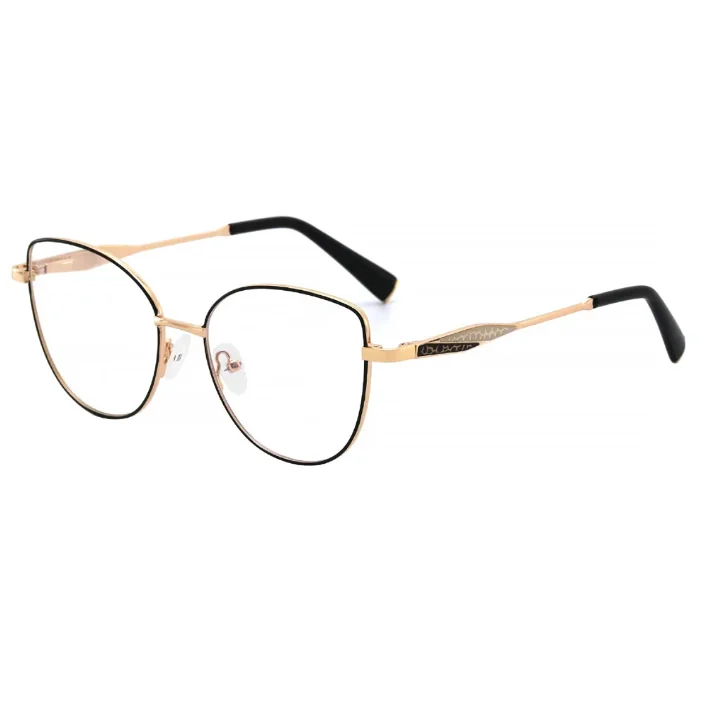
A desk lamp, a monitor, a phone screen—each emits a portion of the visible spectrum that optical labs now routinely address with specialized lens treatments. Yet walk through a wholesale catalog and the range of what gets labeled as anti blue light glasses spans from near-clear lenses with a subtle coating to heavily tinted amber pairs that suggest a different product category altogether. The distinction between these offerings is not merely aesthetic. It resides in spectral transmission data, lens categorization under international standards, frame geometry, and laboratory documentation—all features that can be verified before a shipment leaves the factory. This article walks through the technical markers that separate a blue light lens with a documented protective profile from one that carries a name but little else.
Spectral Attenuation and the Band That Counts
Blue light occupies roughly 380 to 500 nanometers on the visible spectrum. Not all of it acts the same way. The segment from about 415 to 455 nanometers—often termed high-energy visible blue-violet light—has drawn attention because of its potential to induce photochemical stress in retinal tissue over prolonged exposure. Wavelengths from 465 nanometers upward serve a different function, influencing circadian timing and maintaining daytime alertness. A lens that suppresses the entire blue band indiscriminately will shift color perception strongly toward yellow and may disrupt sleep-wake signaling. A more modern approach applies spectral shaping: attenuating transmission in the 415–455 nanometer window while permitting the longer blue-turquoise wavelengths through. This is why the transmission curve of a lens, plotted against wavelength, tells far more than a single percentage number on a spec sheet. When we inspect samples provided by lens suppliers, the first plot we examine is not the promotional figure but the continuous spectral curve between 380 and 500 nanometers, because that curve reveals whether the attenuation lands on the wavelengths that matter or simply spreads evenly across the range for marketing convenience.
What the Blocking Percentage Actually Represents
A claim of “35 percent blue light blocking” is only meaningful when it states the exact wavelength band being measured. Blocking 35 percent across the full 380–500 nanometer span requires absorbing considerable visible energy, producing a pronounced amber tone. Blocking 35 percent within the narrower 415–445 nanometer window—referenced in GB/T 38120-2019 as the targeted protective zone—can be accomplished with a much lighter tint. The Chinese national standard sets a specific metric here: for the 415–445 nanometer interval, blue light transmittance must stay at or below 80 percent, meaning the attenuation reaches at least 20 percent. Above 445 nanometers, transmittance should exceed 80 percent to preserve color recognition and avoid impairing tasks that depend on accurate hue judgment. Anti blue light glasses intended for all-day computer work commonly sit within a 25 to 40 percent blocking range in the HEV blue-violet band, and at those levels the lenses remain clear enough for video conferencing and daytime driving. The procurement implication is straightforward: ask for the band-specific attenuation figure, not the umbrella percentage, because two suppliers quoting the same number may be measuring entirely different wavelength windows.
The Color Trade-Off and Transmittance Categories
Every optical filter modifies visible light transmittance, and the more aggressive the filter, the more noticeable the residual tint. ISO lens categories provide a standard vocabulary here. Category 0 lenses transmit above 80 percent of visible light and remain essentially colorless; Category 1 lenses transmit between 43 and 80 percent and show a definite, though moderate, color cast. Blue light lenses that fall into Category 0 are wearable in all lighting conditions and raise no concerns for nighttime driving, because they do not appreciably reduce overall luminance. Lenses crossing into Category 1 territory might feel reassuringly warm-toned but can create complications for graphic work, color matching, or even the neutral appearance that some professionals want on video calls. The balance manufacturers aim for typically involves a mild substrate tint combined with an anti-reflective stack that targets blue wavelengths specifically, so that the total filtering effect comes from two mechanisms working in parallel rather than from deepening the lens color alone. We have seen this dual-layer strategy become the standard for office-oriented product lines in recent wholesale seasons.
Anti-Reflective Stacks That Handle Reflected Blue Light
The screen in front of a user generates not only direct light but also reflections from overhead fixtures, windows at the periphery, and the user’s own face illuminated by the display. A lens without an anti-reflective coating filters only the transmitted blue light, not the reflected portion entering the eye from oblique angles. A well-designed multi-layer AR coating reduces reflectance across the visible band and can be tuned to suppress blue-wavelength reflections more aggressively. The result is quieter optics: reduced ghost images, less distracting veiling glare, and a lens surface that appears nearly neutral to colleagues looking at the wearer during meetings. In our quality assessments, we at JHEYEWEAR check AR coating performance both under controlled spectrophotometer conditions and under real office lighting, because coatings that perform flawlessly in a dark lab can still leave a residual blue-purple bloom visible to the naked eye under fluorescent panels. That residual bloom, if present, often becomes a consumer complaint point even when the transmission specs are technically sound.
Frame Considerations Shaped by the Workstation Setup
Lens performance accounts for a significant portion of what anti blue light glasses deliver, but the frame governs how consistently that performance reaches the eye throughout a working day. Computer users typically look downward at an angle of 15 to 20 degrees below the horizontal plane. If the optical center of the lens sits too high relative to the pupil, the wearer either tilts the head forward, inviting neck strain, or peers through a peripheral zone where the filter gradient may differ from the center. Frames with a deeper vertical lens profile and a bridge design that permits a slightly lower fitting height keep the optical center aligned with the screen. Weight deserves equal attention. An assembly that crosses 30 grams—frame plus lens—can generate noticeable bridge and temple pressure by the fourth or fifth hour of continuous wear. TR90, with a density roughly 1.14 to 1.15 grams per cubic centimeter, brings total system weight down considerably and has enough elastic compliance to relieve ear-side pressure. Titanium achieves a similar weight reduction through a stiffness-to-mass ratio rather than flexibility. Our experience suggests that buyers serving corporate accounts increasingly prioritize sub-25-gram total assemblies, not as a marketing talking point but as a practical requirement for all-day acceptance.
Laboratory Reports and Standardized Testing
The difference between a supply chain that can substantiate a blue light claim and one that cannot often comes down to a single document: the spectral transmittance test report. A UV-Vis spectrophotometer traces the percentage of light transmitted at each wavelength from 380 to 780 nanometers, producing a continuous curve that serves as the lens’s optical fingerprint. That curve shows UV cutoff, blue attenuation depth and bandwidth, and the overall visible light transmittance that determines the lens category. Standards bodies provide the framework: ISO 12312-1 addresses blue light protection parameters, ANSI Z80.1 covers prescription lens specifications, and GB/T 38120-2019 defines application-specific requirements for blue light protective lenses, including the 415–445 nanometer transmittance ceiling and the transmittance floor above 445 nanometers. For products that may be worn while driving, additional criteria apply: the lens must transmit sufficient light in the red, yellow, green, and blue signal recognition bands to meet traffic safety requirements. CE certification and FDA registration on the lens substrate add further layers of documented compliance that wholesale buyers can request as part of a pre-production qualification package.
What makes a pair of best blue light blocking glasses for computer use technically credible is not a singular breakthrough feature but a constellation of measurable, verifiable characteristics: targeted attenuation in the 415–455 nanometer band, a categorized visible light transmittance level that matches the intended usage environment, an anti-reflective coating that addresses reflected as well as transmitted blue light, a frame geometry suited to the downward screen gaze, and a test report that converts a claim into a plotted curve. These features interact; a lens with precise spectral data loses practical value in a frame that slides off the nose during a spreadsheet session, just as a perfectly fitted frame cannot compensate for a lens that blocks nothing of consequence in the high-energy band. By focusing on specifications that can be checked against an external standard, procurement moves from a contest of marketing phrases to a comparison of engineering documentation—and that is where blue light protection stops being a concept and becomes an actual, delivered product property.