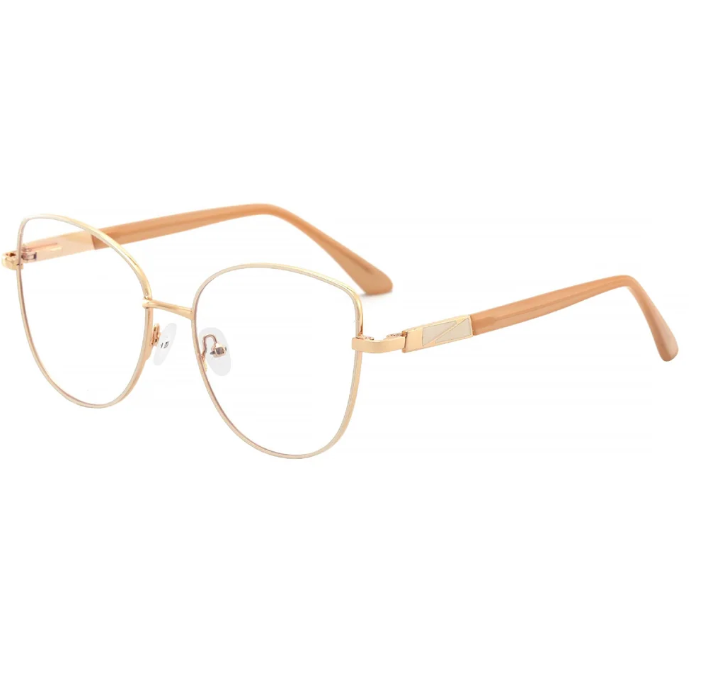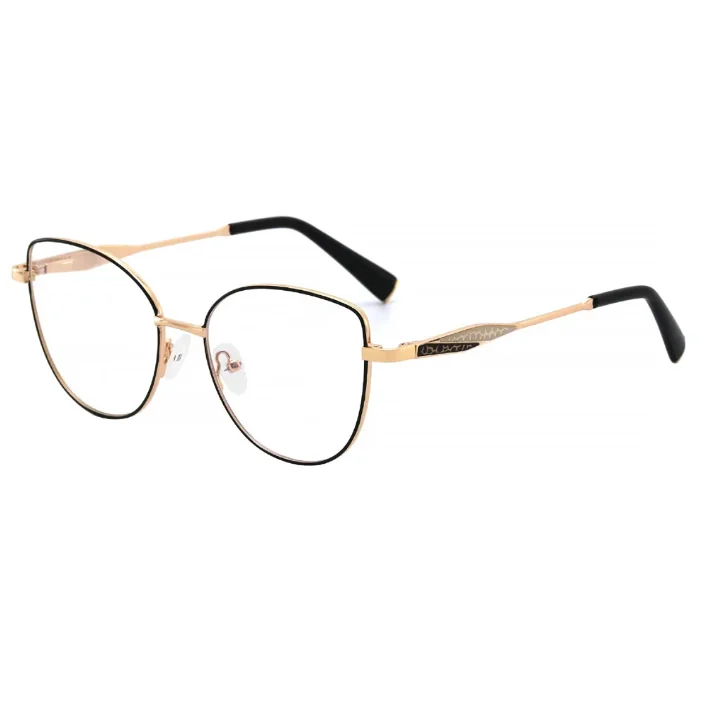
Occupational health data consistently highlights a correlation between prolonged screen exposure and mid-afternoon cephalalgia. These symptoms are not fleeting inconveniences. They represent a genuine physiological response to the light that LED and OLED screens emit, and they affect productivity across entire teams. When our optical engineers examine this pattern, they find a direct link between specific wavelengths of visible light and the discomfort that so many screen users describe. Clarifying that link can help businesses make more informed choices about visual wellness tools, including anti blue light glasses that selectively filter the most energetic parts of the visible spectrum.
Where Visual Fatigue Begins: The Energy of Short Wavelengths
To understand why a screen triggers tired eyes, we have to look at how the eye processes different wavelengths of light. Blue light sits at the high-energy end of the visible spectrum, oscillating between roughly 380 and 500 nanometers. Photons in this range carry more energy than those producing green or red sensations, which means they interact with ocular tissues with greater intensity. When these short waves enter the eye, they do not all travel cleanly to the retina. A portion scatters within the vitreous humor and the crystalline lens itself, creating a diffuse luminance that overlays the image the retina receives. This optical noise forces the visual system to constantly work to extract contrast from a slightly washed-out signal.
The ciliary muscles that control lens accommodation respond to this low-contrast environment by making small, repetitive adjustments, even when the viewing distance remains fixed. Over a normal eight-hour working day, those accumulated micro-contractions represent a considerable physical load. The result is what many employees describe as a deep, pressing ache behind the eyes—a direct consequence of sustained muscular effort layered on top of the optical scatter blue wavelengths cause. Because LED backlights concentrate more spectral power in the blue region than earlier display technologies did, the effect has become more pronounced as screens have become brighter and more energy-efficient.
From Eye Strain to Full Head Pain
The progression from ocular fatigue to a headache follows pathways that neurology has mapped with increasing precision. Periorbital and frontal pain often arise when tension in the eye muscles refers sensation along the trigeminal nerve branches that innervate the region. In practice, this means that the strain accumulated in the ciliary body and extraocular muscles does not stay confined to the eye socket. It radiates outward, producing the forehead tightness and temple pressure that screen users frequently report by the end of a working session.
There is also a more direct chromatic pathway. The retina contains a population of ganglion cells that express the photopigment melanopsin, making them intrinsically photosensitive. These cells respond most strongly to blue wavelengths near 480 nanometers, and they connect to areas of the brain involved in pain modulation and light sensitivity. Research has demonstrated that when light in this part of the spectrum stimulates these cells, it can amplify the perception of pain and contribute to the throbbing quality of headaches. For people who already have a lower threshold for tension-type or migraine-like symptoms, prolonged blue light exposure becomes a reliable trigger.
Sleep disruption adds a compounding layer. Blue light after sunset delays the pineal gland’s release of melatonin, the hormone that signals the body to prepare for rest. When melatonin onset shifts later, total sleep time shortens and deep sleep stages are reduced. Morning tiredness then lowers the visual system’s tolerance to screen light the next day. A pattern forms: blue light contributes to an immediate strain headache, fragments sleep, and then leaves the eyes more vulnerable to the same stimulus the following morning.
How Wavelength Filtration Interrupts the Cycle
The optical strategy behind anti blue light glasses is built on the principle of selective absorption. By embedding compounds within the lens material that capture photons in the 415–455 nanometer band, manufacturers can lower the proportion of high-energy visible light that reaches the retina without significantly altering color perception for tasks like reading or design work. This targeted reduction tackles the scatter problem at its source: fewer short-wavelength photons entering the eye means less intraocular glare and less demand on the accommodation muscles.
The neural pathway also benefits. Lowering blue light exposure reduces the activation of melanopsin-containing ganglion cells, which in turn dampens the signal that feeds pain-sensitized brain regions. While the effect is not instantaneous, consistent use of anti blue light glasses during screen time helps maintain a lower baseline level of neural excitement in the photophobia-linked circuits. This is often the difference between finishing a workday with a mild, manageable sensation of tiredness and developing the kind of full-blown headache that cuts concentration short.
We also see an indirect benefit through circadian support. By filtering blue light in the late afternoon and evening, the lenses allow the body’s melatonin rhythm to rise more naturally, which protects sleep quality. Better sleep restores the eye’s surface and the visual cortex’s processing capacity, making the entire system more resilient to screen exposure the following day.
What We Observe in Daily Use
The data we collect from optometry partners and occupational health consultants repeatedly highlight a pattern: the combination of wavelength-filtering eyewear and basic screen ergonomics yields more consistent relief than either measure alone. Simple habits like the 20-20-20 rule—pausing every twenty minutes to look at a point twenty feet away for twenty seconds—give the ciliary muscles a chance to reset. When the lenses reduce the underlying optical scatter at the same time, those brief breaks become more restorative. Users often report that the gritty, dry sensation diminishes and that the temples feel less compressed by late afternoon.
From a business standpoint, equipping teams with anti blue light glasses is a practical investment in sustained attention. We have worked with procurement managers who view visual comfort as part of the broader occupational health framework, alongside ergonomic seating and monitor positioning. The advantage of lens-based filtration is its immediacy; there is no software to install, no screen brightness to recalibrate, and no compliance protocol required beyond wearing the frames during screen exposure. This simplicity supports consistent adoption across diverse teams.
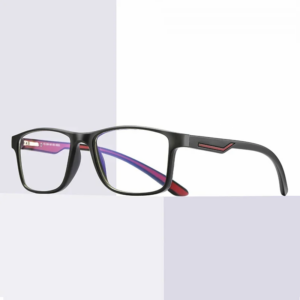
At JHEYEWEAR, our anti blue light glasses are built around precisely this filtering logic, with lab-tested lenses that deliver the wavelength selectivity we have described.
Persistent headaches and eye fatigue do not need to be accepted as an inevitable cost of screen-heavy work. When we trace the symptoms back through the optical scatter, the muscular strain, and the neural sensitization that blue light initiates, the value of a well-designed filtering lens becomes clear. Reducing the short-wavelength load on the retina addresses the problem at the point of entry, before it cascades into pain and lost concentration. Combined with sensible screen habits, that approach gives teams a straightforward way to protect their visual stamina across long working hours.