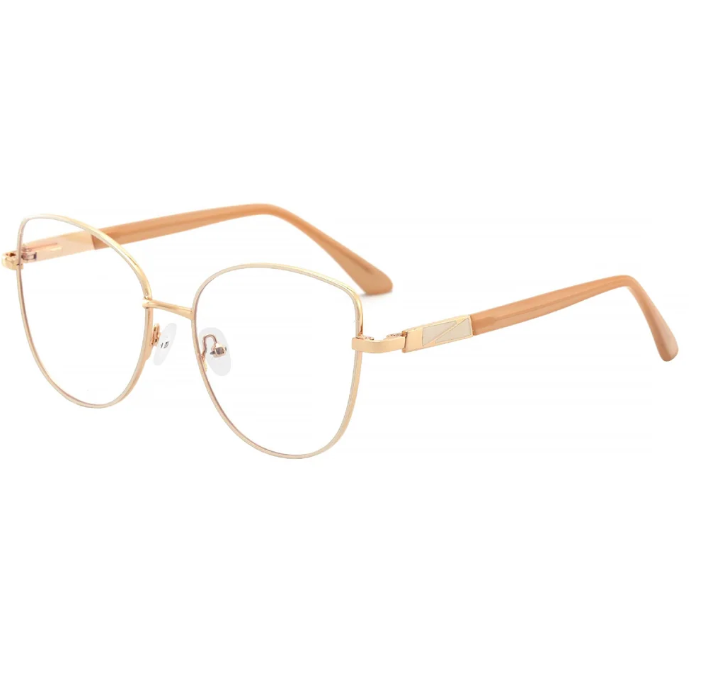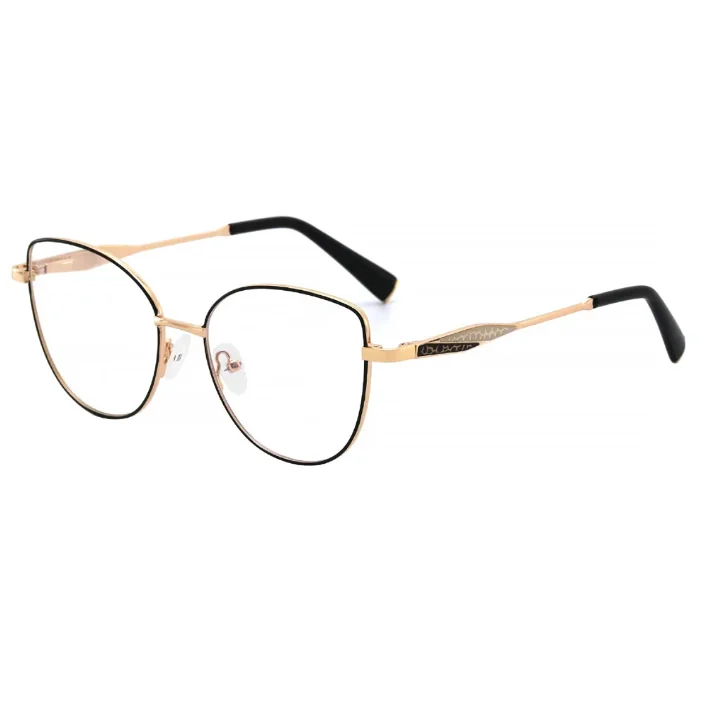
When a lens blank arrives at an optical lab measuring 8 mm at its thickest edge, the frame that receives it faces a set of mechanical demands that go far beyond aesthetics. Prescriptions exceeding ±6.00 diopters routinely produce lenses weighing 30 to 40 grams—roughly double the mass of a standard dress frame alone. The result is not merely a heavier pair of spectacles but a system in which static load, fulcrum placement, and material fatigue interact in ways that can compromise both comfort and optical alignment over time. This article unpacks the structural logic behind how optical glasses frames manage that load, examining the role of frame architecture, material selection, bridge mechanics, temple design, and the evolving use of composite construction in heavy-lens applications.
Load Paths and Why the Rim Matters
The first structural decision a frame makes about a heavy lens is how it encloses it. A full-rim design does more than contain the lens edge; it creates a circumferential load path that transfers the mass of the lens directly into the frame front, distributing force across the entire perimeter rather than concentrating it at mounting points. This is why opticians consistently direct strong-prescription wearers toward fully enclosed frames: the rim acts as a continuous compression ring, holding the lens securely while shielding the thickest portions from impact or accidental dislodgement. Semi-rimless constructions, in contrast, rely on a nylon cord or a partial metal groove to suspend the lens, leaving a significant portion of the lens edge unsupported—a design better suited to lighter, thinner lenses where the structural stakes are lower. Rimless mounts, which anchor lenses through drilled holes, concentrate stress at the drill points, creating a risk of lens fracture or mounting fatigue in high-mass applications. The geometry of the rim opening also matters. Smaller lens diameters reduce the total volume of material required, which directly lowers the finished lens weight and keeps the center of mass closer to the bridge pivot—an advantage that holds across all high-index formulations.
Titanium and TR90: Two Routes to the Same Goal
Frame material becomes a primary engineering variable when every additional gram of frame mass compounds the total load resting on the wearer’s nose. Titanium frames have gained steady adoption in heavy-lens applications because the metal delivers tensile strength comparable to steel at roughly 40% of the weight, allowing a frame front to remain structurally rigid without contributing excessive self-weight. That rigidity is valuable: it prevents the frame from flexing under the asymmetric pull of a thick lens, which could otherwise shift the optical axis. TR90, a nylon 12 memory polymer, takes a fundamentally different approach. The material’s anti-deformation index of 620 kg/cm² and its ability to recover from significant bending mean it can absorb shock and incidental flex without accumulating permanent deformation—an important consideration for wearers who handle their frames frequently. TR90 is notably lightweight—its density of roughly 1.14–1.15 g/cm³ makes it approximately 30% lighter than traditional sheet plastics—which helps offset the mass of a heavy lens while providing enough structural compliance to avoid brittle failure modes seen in some rigid thermoplastics. Each material addresses the same challenge through opposing mechanical strategies: titanium through stiffness-to-weight ratio, TR90 through elastic energy absorption.
The Bridge as a Load Redistribution Point
In any eyewear structure, the bridge functions as the load redistribution node: it carries the combined weight of the frame front and lenses and transfers that load to the nose pads or the bridge surface itself. When lenses are heavy, the default saddle bridge design common in acetate frames can create a concentrated pressure zone along a narrow contact line, particularly for wearers whose nasal anatomy lacks a broad, flat bridge surface. Fixed nose pads compound this problem by offering no adjustability to shift the load to a different bearing surface. Metal frames fitted with independent, adjustable nose pads provide a practical solution: pad arms can be positioned to broaden the contact area and lower the pressure per unit of skin surface. For optical glasses frames destined for strong-prescription customers, adjustable pad systems are a practical consideration rather than a cosmetic detail. In full-plastic designs, a keyhole bridge offers an alternative load path by distributing weight along the sides of the nose rather than concentrating it at the apex, a configuration that can reduce both slipping and red-mark formation during extended wear.
Temple Design and the Counterweight Principle
The temples do more than anchor a frame to the ears; they act as opposing levers that counterbalance the forward-weighted mass of the frame front. When lenses are heavy, the center of mass shifts forward, increasing the tendency of the frame to slide down the nose. Temple length, profile thickness, and terminal-end curvature all influence how effectively the rear portion of the frame offsets this forward bias. A temple that is too light or too short provides insufficient counterbalance, forcing the bridge to bear a disproportionate share of the load. A temple that is too rigid can concentrate pressure at the mastoid contact point behind the ear, creating discomfort that builds throughout the day. Spring hinges introduce a degree of controlled compliance—they allow the temple to flex outward slightly, accommodating head movement without transferring that force back to the frame front. However, spring mechanisms add small but measurable weight at the hinge joint, and when lenses are already heavy, the cumulative mass at multiple attachment points must be accounted for in the design equation. In some production scenarios, pairing a rigid but lightweight front material (such as titanium) with TR90 temples that flex at the side achieves a functional division of labor: the front holds the lens precisely, while the temples introduce compliant load relief.
Testing What Matters: Bridge Deformation and Lens Clamping Force
Laboratory testing offers a quantitative window into how a frame performs under load. Bridge deformation testing subjects the frame to controlled cyclic or static loading that simulates daily handling and accidental pressure, measuring both the deflection during load application and the permanent set remaining after load removal. Excessive permanent deformation indicates that the bridge material or cross-sectional design is insufficient for the intended lens weight and handling conditions, a risk factor for eventual misalignment. Lens clamping force evaluation measures the force required to insert and extract a standard test lens from the frame groove, verifying that the rim holds securely without imposing stress levels that could lead to lens cracking or frame fatigue over time. Industry standards such as ISO 12870:2016 define the test parameters and acceptance thresholds for these measurements, providing manufacturers and buyers with a common language for assessing the structural adequacy of optical glasses frames intended for high-mass lens applications.
The Composite Approach for Heavy Lenses
An emerging strategy for managing heavy-lens load is composite construction, where different materials are assigned to different structural zones of the same frame. The combination that sees growing adoption in prescription-oriented collections pairs a rigid full-rim front—commonly acetate or titanium—with TR90 or beta-titanium temples. The rationale is functional specialization: the rim front encloses and supports the lens mass with minimal deformation, while the flexible temples introduce shock absorption and reduce the transfer of lateral stress to the bridge when the wearer removes glasses one-handed or bends to pick them up. This approach does not eliminate the individual material trade-offs discussed earlier, but it distributes them across the frame architecture according to the demands of each zone. At JHEYEWEAR, our optical frame portfolio spans acetate, metal, TR90, and titanium constructions, with OEM and ODM capabilities that allow buyers to specify composite material combinations suited to high-prescription product lines.
The structural demands of heavy prescription lenses reveal which frame designs hold up under sustained load and which do not. Full-rim enclosures, material-matched mass, load-aware bridge geometry, counterbalanced temple design, and measurable clamping performance together form the technical basis for reliable frame specification. When the lens weight exceeds 30 grams, frame selection stops being a styling exercise and becomes an engineering calculation—one where the right optical glasses frames earn their keep by performing a job that can be measured, tested, and verified.