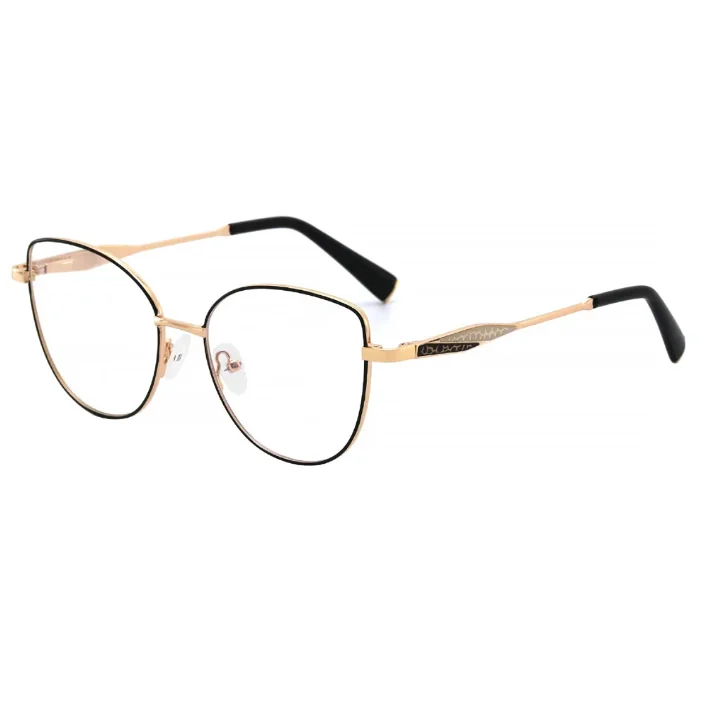
Frame buyers inspecting a spec sheet often treat the term “acetate” as a single material category. In practice, what arrives on the bench can carry two very different additive packages behind the same cellulose base. Conventional acetate eyewear frames and their bio-acetate counterparts share a polymer skeleton, yet their mechanical behaviour, environmental chemistry and certification pathways diverge at the compounding stage. This article walks through those technical distinctions with reference to published composition data, biodegradation standards and life-cycle inventories, leaving marketing language aside and focusing on the material science that procurement teams encounter when qualifying frame stock.
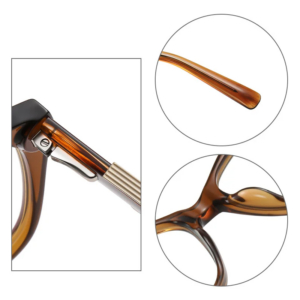
The Acetylation Constant
Every cellulose acetate block begins with refined cellulose, whether extracted from softwood pulp or cotton linters. Acetylation converts the hydroxyl groups along the cellulose chain into acetate esters, producing a thermoplastic that dissolves in solvent, extrudes into sheet and accepts both pigment loading and surface polishing. This process holds true for classic acetate eyewear frames and bio-acetate grades alike. Because the polymer backbone remains unchanged, both materials can be laminated into tortoiseshell patterns, milled into fine silhouettes and reheated for glazing adjustments. The performance gap opens only when the sheet leaves the resin kettle and enters the compounding extruder, where plasticisers are folded into the melt.
Fossil Versus Vegetable Plasticisers
Plasticiser selection governs how the polymer chains slip past one another under stress. In petroleum-based acetate, the plasticiser fraction commonly draws from phthalate feedstocks—compounds that deliver reliable flexibility at a manageable cost but carry ongoing regulatory attention in consumer goods. Bio-acetate replaces that fossil fraction with plasticisers obtained from renewable sources such as cereal starch, beet derivatives or sugar cane processing streams. Radiocarbon testing performed according to ASTM D6866 consistently places bio-acetate at 65–68% bio-based carbon, while standard acetate sits closer to 40%. This shift does not reduce the frame’s gloss, dye affinity or dimensional stability; it changes the chemical registry of the material and, with it, the end-of-life degradation pathway. For wholesale buyers validating supplier claims, asking for a lab-certified bio-based carbon percentage is often more instructive than relying on the term “bio” alone.
Compostability Standards and Measured Breakdown
Cellulose acetate is frequently described as biodegradable, yet the rate and completeness of degradation depend heavily on plasticiser chemistry. Petroleum-derived plasticisers resist microbial metabolism, leaving conventional acetate eyewear frames largely intact in landfill conditions. Bio-acetate formulations designed for industrial composting tell a different story. The Mazzucchelli M49 grade, for instance, meets ISO 17088:2012 and UNI-EN-ISO 14855-2:2018, demonstrating over 90% disintegration with residual mass below 10% under controlled composting temperatures, humidity and microbial load. It is critical to distinguish “compostable” from “biodegradable in ambient conditions”; the certified performance occurs inside managed facilities, not in soil or seawater. Procurement specifications that reference ISO composting standards therefore carry greater technical weight than blanket environmental assertions.
Carbon Footprint at the Manufacturing Gate
Comparative life-cycle assessments under ISO 14040 and ISO 14044 offer a quantitative window into production-stage emissions. A study co-published by EssilorLuxottica and Mazzucchelli examined global warming potential for multiple acetate formulations and found that bio-acetate yields lower CO₂-equivalent output per kilogram of sheet compared to petroleum-based grades. Separately, Eastman’s Acetate Renew—a closed-loop material combining bio-cellulose with recycled content—has been reported to cut carbon footprint by roughly one kilogram of CO₂ per frame compared to a conventional acetate baseline. The primary driver in all these reductions is the substitution of renewable carbon for fossil carbon in the plasticiser and, where applicable, in the solvent recovery cycle. Frame manufacturers do not need to alter tooling or polishing lines to capture this benefit; the change manifests in the raw sheet inventory.
Quality Assurance Across Material Transitions
Procurement managers considering a shift from conventional to bio-acetate face practical quality-control questions that go beyond environmental data. Both materials respond to barrel tumbling and hand-polishing in similar fashion, so a factory’s finishing workflow remains unchanged. The challenge emerges in colour formulation. When Oscar Wylee expanded into bio-acetate frames, its team individually matched more than 130 colour variants, because a change in plasticiser base can subtly shift hue depth and translucency. This means that a batch of bio-acetate sheet may not colour-match an existing petroleum-acetate sample without reformulation. At JHEYEWEAR, we include acetate optical frames in both classic and bio-based compositions within our wholesale catalogue, which allows accounts to evaluate colour cards and mechanical samples side by side before committing to production runs.
The distinction between bio-acetate and conventional acetate is not a matter of polymer quality but of plasticiser origin. Swapping fossil-based plasticisers for vegetable-based equivalents raises renewable carbon content, enables compliance with industrial composting standards and reduces cradle-to-gate emissions, all while preserving the deep colour, polished lustre and adjustability that make acetate a preferred frame material. For supply-chain decision-makers, the evaluation turns on reconciling certified material data with unit cost and on confirming that the sheet supplier can deliver the colour repeatability and mechanical consistency that optical finishing demands.