What reading glasses styles are most relevant for seniors in 2026?
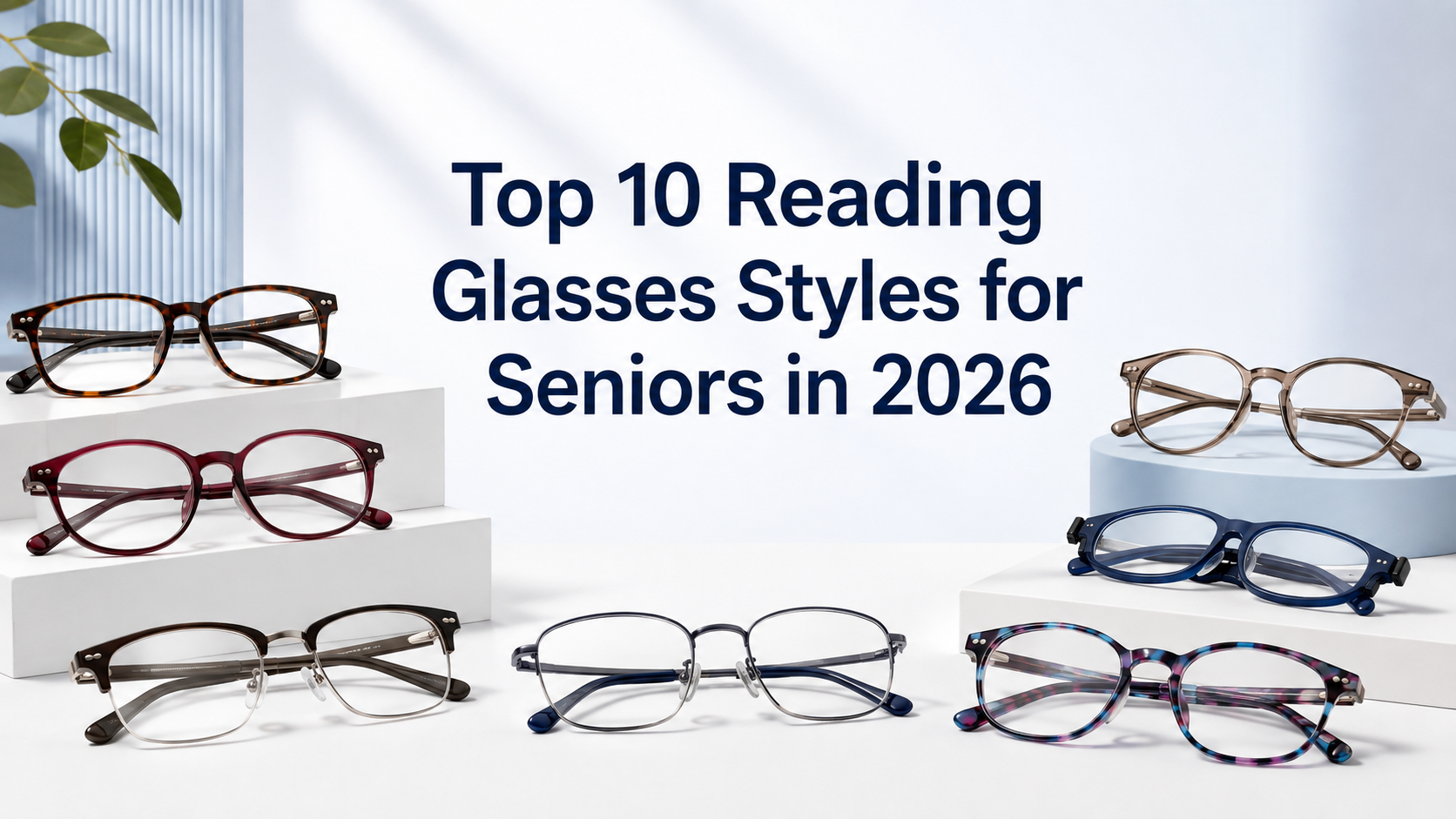
The most relevant reading glasses styles for seniors in 2026 combine clear near vision, low weight, easy handling and recognizable retail positioning. For a wholesale range, the strongest assortment is usually a mix of classic full-rim readers, lightweight plastic or TR90 models, metal frames, progressive readers, blue-light-filtering options, folding travel readers and easy-to-find magnetic or neck-hanging designs.
No single style suits every senior buyer. Pharmacy chains generally need dependable core models and clear power labeling. Fashion retailers can support more color and shape variation. Travel and gift channels may favor compact mechanisms and cases.
Quick comparison of 10 reading glasses styles
| Style | Main buyer benefit | Common materials or features | Best-fit retail channel | Main purchasing check |
|---|---|---|---|---|
| 1. Classic rectangular full-rim | Familiar fit and broad appeal | PC, acetate-look plastic or metal | Pharmacy, supermarket, wholesale | Hinge consistency and lens-power accuracy |
| 2. Soft-square lightweight reader | Modern look with a larger reading area | PC or TR90-style frame | Pharmacy, fashion and online retail | Frame weight and temple pressure |
| 3. Round or panto reader | Distinctive unisex styling | Plastic, metal or mixed material | Boutique and fashion retail | Usable lens depth and bridge fit |
| 4. Slim metal reader | Thin profile and professional appearance | Stainless steel or other metal construction | Office, pharmacy and gift channel | Plating, solder points and nose-pad security |
| 5. Flexible lightweight reader | Comfort and reduced breakage risk | TR90 or flexible plastic | Pharmacy and travel | Heat stability and repeated flex testing |
| 6. Progressive multifocal reader | Near and intermediate convenience | Multiple-focus lens design | Pharmacy and online retail | Clearly defined lens zones and user instructions |
| 7. Blue-light-filtering reader | Screen-use positioning | Near-power lens with filter or coating | Office, e-commerce and pharmacy | Spectral report and unsupported health claims |
| 8. Folding reader | Compact storage | Folding bridge and/or temples | Travel, gift and convenience retail | Cycle test, screw retention and case fit |
| 9. Magnetic front-connection reader | Easy access around the neck | Front magnetic connection and neck-hanging temples | Travel and specialty retail | Magnet retention and pinch-point design |
| 10. Oversized easy-view reader | Larger field and visible fashion statement | Larger full-rim plastic frame | Fashion, pharmacy and online retail | Finished weight and lens thickness |
1. Classic rectangular full-rim reading glasses
Classic rectangular readers are a practical anchor SKU because the shape is familiar, easy to merchandise and compatible with a wide range of face shapes. B2B buyers can use neutral black, tortoise-look, navy and translucent colors as the core assortment, then add brighter colors only where local sell-through supports them.
For pharmacy programs, a style is not durable merely because the frame looks thick. Buyers should review hinge opening consistency, screw retention, temple alignment, surface finish and the accuracy of the marked near power.
2. Soft-square lightweight reading glasses
Soft-square frames provide more lens depth than very narrow readers while avoiding an overly angular appearance. This makes the style suitable for buyers who want a contemporary update without moving too far from established pharmacy designs.
PC and lightweight flexible plastics are common choices. The sourcing trade-off is straightforward: a lighter frame can improve comfort, but thin components still require controlled molding, stable hinges and repeatable assembly.
3. Round and panto reading glasses
Round and panto readers create a recognizable fashion option within an otherwise functional category. They work best as a supporting group rather than the only shape in a senior assortment.
Buyers should confirm that the lens height supports the intended near-vision use and that the bridge dimensions suit the target market. A visually attractive frame with an unsuitable bridge or shallow usable lens area will produce avoidable returns.
4. Slim metal reading glasses
Slim metal readers suit office, pharmacy and gift channels that want a more refined appearance. Stainless steel and other metal constructions can support thin profiles, adjustable nose pads and multiple finish colors.
Wholesale inspection should focus on soldering, plating consistency, nose-pad attachment, temple alignment and exposed edges. Metal construction alone does not prove durability; production control and finished-frame testing are decisive.
5. Flexible lightweight reading glasses
Flexible readers are commercially useful for buyers who prioritize comfort and reduced damage during everyday handling. TR90 and other engineered plastics are often specified for this purpose, although material names should be confirmed on the supplier’s bill of materials rather than inferred from appearance.
Ask the supplier how frame flexibility, dimensional recovery and heat exposure are evaluated. A dramatic hand-bending demonstration is not a substitute for a documented test method and an approved production sample.
6. Progressive multifocal reading glasses
Progressive or multifocal readers offer more than one viewing zone and may serve users who switch between near and intermediate tasks. They require more careful merchandising than single-power readers because users need to understand the lens layout and limitations.
Buyers should approve the power design, corridor or zone arrangement, labeling and instructions before production. Ready-to-wear multifocal products are not a replacement for an individualized eye examination or prescription eyewear when a user has different powers between the eyes, astigmatism or other visual needs.
7. Blue-light-filtering reading glasses
Blue-light-filtering readers combine near magnification with a lens filter or coating for screen-use positioning. They may be useful as a distinct retail segment, but buyers should avoid medical claims that exceed the supporting evidence.
A 2023 Cochrane review of 17 randomized controlled trials concluded that blue-light-filtering spectacle lenses may not reduce short-term computer-related eye strain compared with non-filtering lenses. Procurement should therefore focus on measurable lens specifications, color neutrality, surface quality and compliant claims rather than promises of retinal protection or guaranteed relief.
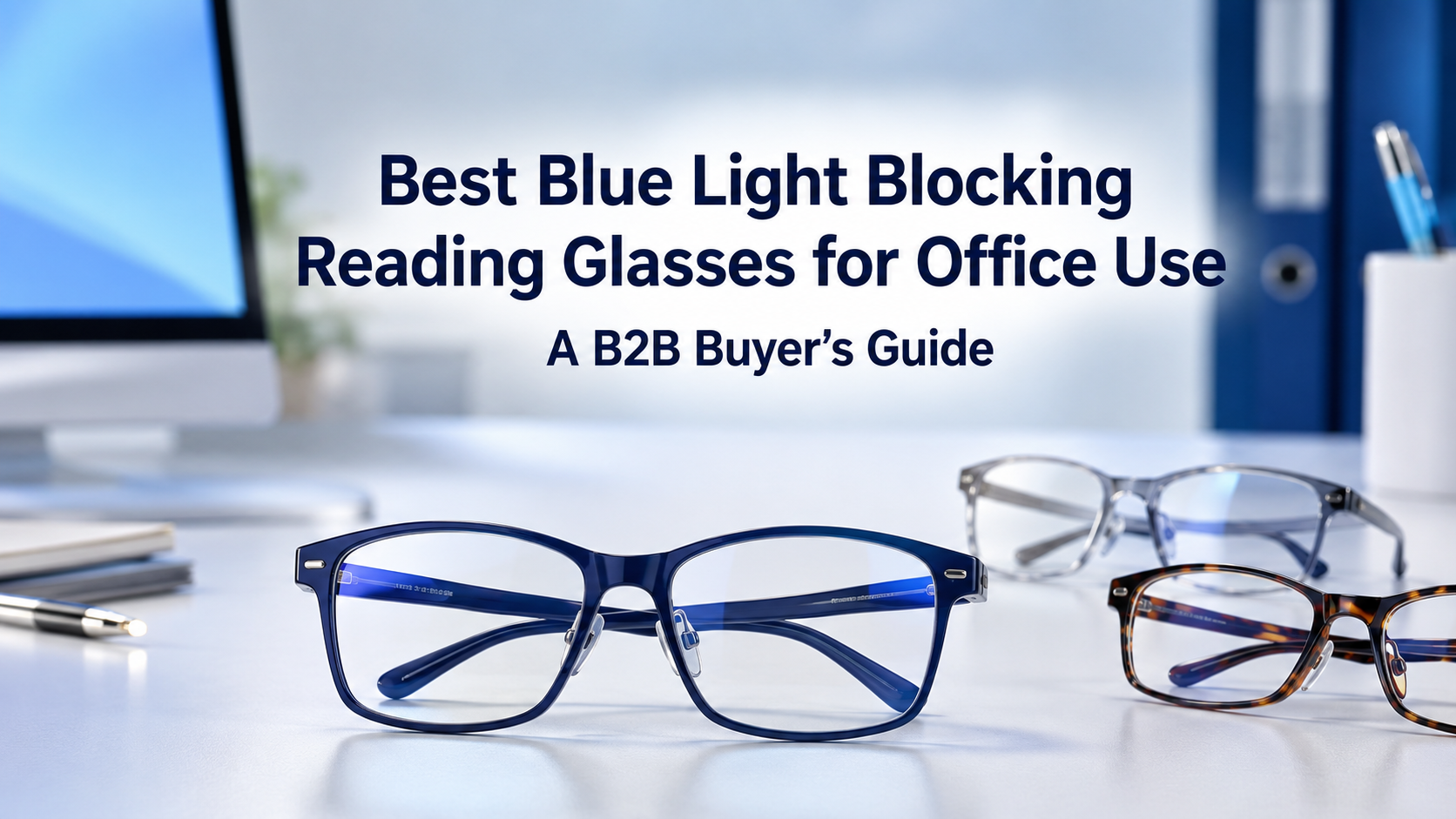
Buyers developing an office-focused range can learn how to compare lens specifications, frame comfort and performance claims in our guide to blue light reading glasses for office use
8. Folding reading glasses
Folding readers reduce storage volume and fit travel, convenience and gift channels. The additional joints create additional failure points, so purchasing decisions should include repeated opening-and-closing evaluation, screw retention checks and confirmation that the folded product fits its case without excessive pressure.
ISO 12870:2024 covers mass-produced spectacle frames, including folding frames. Buyers should identify which product-level and market-specific requirements apply to the complete reading glasses, rather than treating a general certificate as proof for every SKU.
9. Magnetic front-connection reading glasses
Magnetic readers usually separate at the front and remain around the neck through extended temples or a connected neck piece. Their commercial advantage is accessibility: users do not need to search for a separate pair or case each time.
Buyers should evaluate magnet retention, alignment, corrosion resistance, skin-contact surfaces and possible pinch points. Retail instructions should also explain the opening method and relevant precautions for users of implanted medical devices when required by the target market and product design.
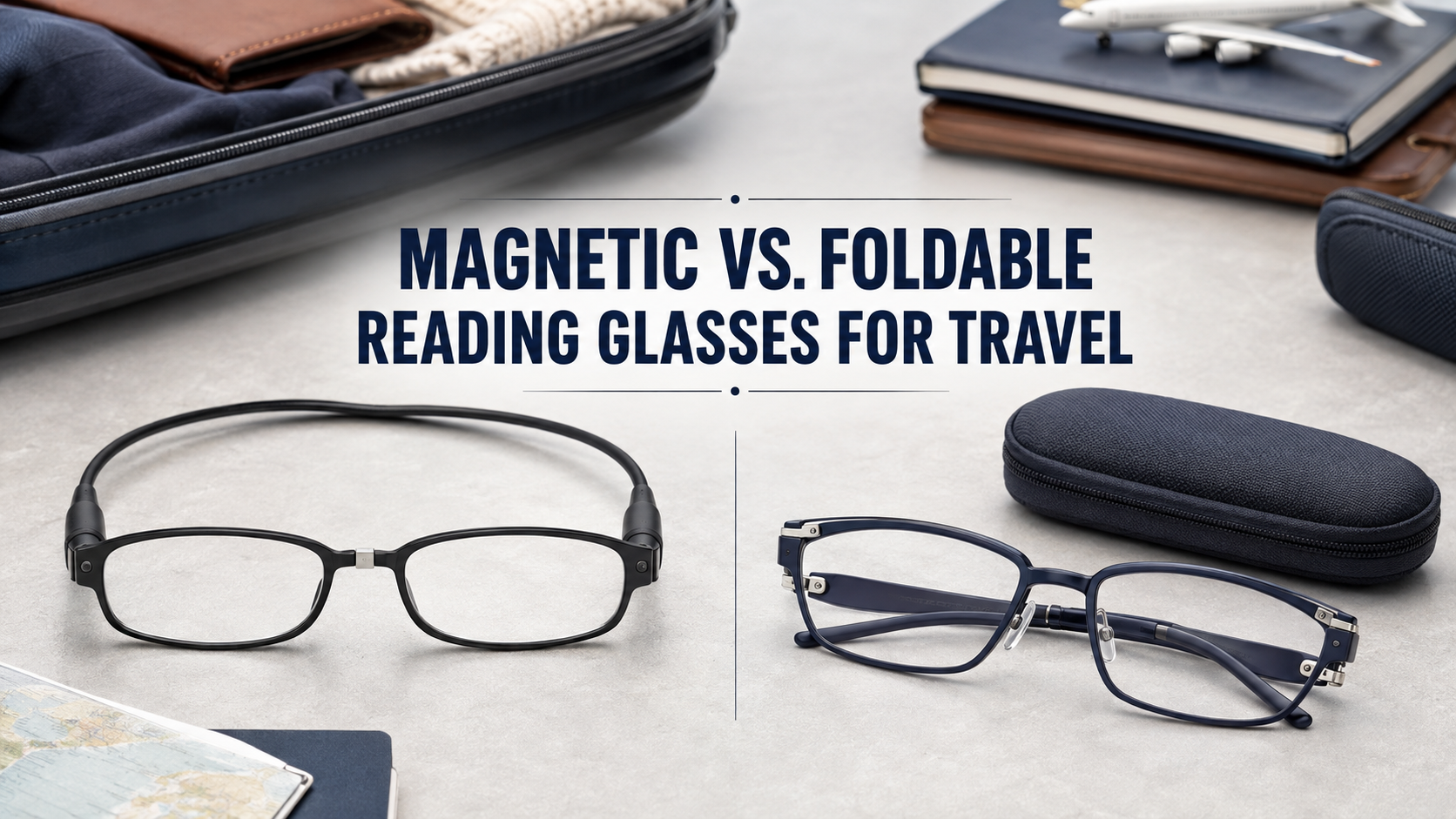
For a detailed comparison of portability, mechanism durability and packaging requirements, see our wholesale guide to magnetic vs. foldable reading glasses for travel
10. Oversized easy-view reading glasses
Oversized readers offer a larger visual field and a strong display presence. They can work for fashion-led senior ranges, but size increases can also raise finished weight and edge thickness at higher powers.
Buyers should approve the actual frame-and-lens combination at several powers, not only a plano demonstration sample. Fit, optical center placement, weight distribution and cosmetic lens thickness can change across the power range.
How should wholesale buyers build a balanced 2026 assortment?
A practical opening range can allocate most SKUs to proven full-rim plastic and metal shapes, then reserve a smaller share for progressive, folding, magnetic and fashion-led options. The exact ratio should follow the buyer’s own point-of-sale data, target age group, price band and channel.
Within each selected frame, reduce unnecessary variation. A controlled color range and a clearly defined power ladder are easier to forecast, inspect and replenish than a large number of low-volume combinations.
Pharmacy and retail buyers should also evaluate hinge construction, lens retention, packaging and batch consistency when selecting durable wholesale reading glasses for pharmacy chains
What should buyers request from a reading glasses manufacturer?
Request a written specification covering frame material, lens material, available powers, power tolerance, dimensions, hinge construction, coatings, logo method, packaging, labeling and applicable tests. Approve a physical sample and packaging artwork before mass production. For chain retail, add an agreed inspection standard and defect classification.
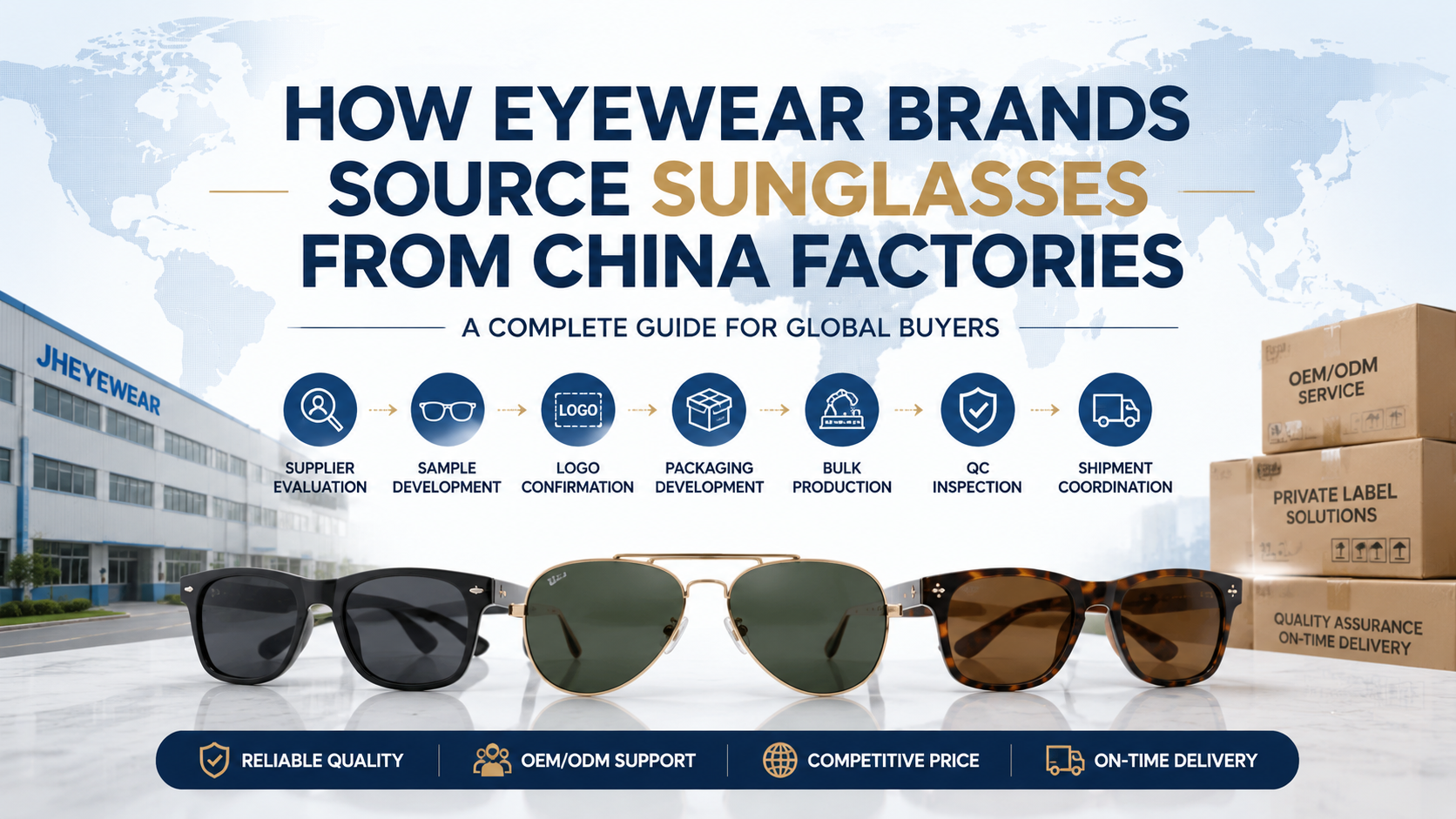
Shanghai Jheyewear Co., Ltd. supplies ready-stock reading glasses with logo customization from 300 pieces for selected models and OEM/ODM reading-glasses programs typically from 1,200 pieces per model. Final MOQ, colors, powers and packaging depend on the approved specification.
JHEYEWEAR is a custom reading glasses manufacturer serving brands, wholesalers, pharmacy chains, distributors and retailers through OEM, ODM and private-label production.
Frequently asked questions
Q1: Which reading glasses shape is easiest for a pharmacy chain to stock?
Classic rectangular and soft-square full-rim readers are practical core choices because they are familiar, easy to display and available across broad color and power programs. The best choice still depends on local sales and fit data.
Q2: Are flexible reading glasses always more durable?
No. Flexibility is one material behavior, not a complete durability result. Hinge construction, screw retention, molding quality, heat stability, assembly and finished-product testing also affect service life.
Q3: What powers should a wholesale reading-glasses range include?
Many commercial programs cover common near additions from +1.00 to +4.00 in regular steps. Buyers should choose the exact range and unit mix from local demand, labeling rules and the intended retail channel.
Q4: Can ready-to-wear reading glasses replace prescription eyewear?
Not for every user. Ready-to-wear readers generally provide the same near power in both eyes and do not correct individualized conditions such as unequal prescriptions or astigmatism. Persistent visual symptoms require an eye-care professional.