What are the best blue light reading glasses for office use?
The best blue light reading glasses for office use are products with the correct near power, a comfortable frame, acceptable color transmission, low distracting reflection and documented lens performance. For B2B sourcing, a “blue light blocking” label is not enough. The supplier should state what wavelength range is measured, the test method, the transmission result and whether the effect comes from the lens substrate, an applied coating or both.
Office users also need the correct viewing distance. Standard near readers may suit documents and close work, while some desktop-monitor users need a different intermediate power or individualized prescription.
Do blue light blocking glasses reduce office eye strain?
Current evidence does not show a clear short-term advantage over ordinary lenses. A 2023 Cochrane systematic review evaluated 17 randomized controlled trials and concluded that blue-light-filtering spectacle lenses may not reduce computer-related eye strain compared with non-filtering lenses. Evidence for sleep and retinal outcomes was also uncertain or insufficient for strong claims.
This finding does not prevent buyers from offering blue-light-filtering readers as a product feature. It does mean that marketing should describe measurable filtering and product construction without claiming guaranteed relief, retinal protection or treatment unless the claim is supported and lawful in the target market.
What should a wholesale buyer compare?
| Procurement factor | What to request | Why it matters |
| Near power | Marked power, tolerance and inspection method | Incorrect power can cause complaints even when the frame is good |
| Blue-light transmission | Spectral transmittance report with wavelength range and method | A percentage without a defined range is not comparable |
| Visible color | Physical sample on white and digital displays | Strong filtering may add an unwanted yellow tint |
| Reflections | Coating description and sample under office lighting | Highly visible reflections can reduce cosmetic acceptance |
| Lens surface | Scratch, coating adhesion and cosmetic inspection criteria | Office readers are handled and cleaned frequently |
| Frame comfort | Finished weight, bridge, temple pressure and dimensions | Long work sessions expose fit problems quickly |
| Claims | Approved packaging and website wording | Reduces regulatory and reputational risk |
| Compliance | Product-specific reports for destination market | Supplier certificates do not automatically cover every model |
How should blue-light-filter percentages be compared?
Blue-light-filter percentages are meaningful only when the measured wavelength interval and test method are disclosed. A supplier reporting “40% blue light blocked” over one spectral band cannot be compared directly with a supplier reporting a result over a different band.
Buyers should request the full spectral transmittance curve or laboratory report, not only a badge or headline percentage. The approved production lens should match the tested lens material, color and coating. If the lens specification changes, confirm whether the earlier report still applies.
Which frame materials suit office reading glasses?
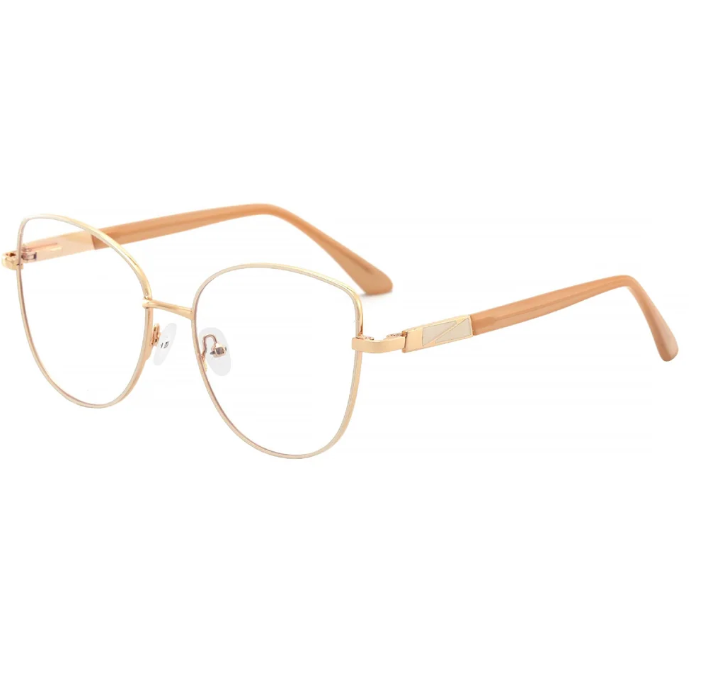
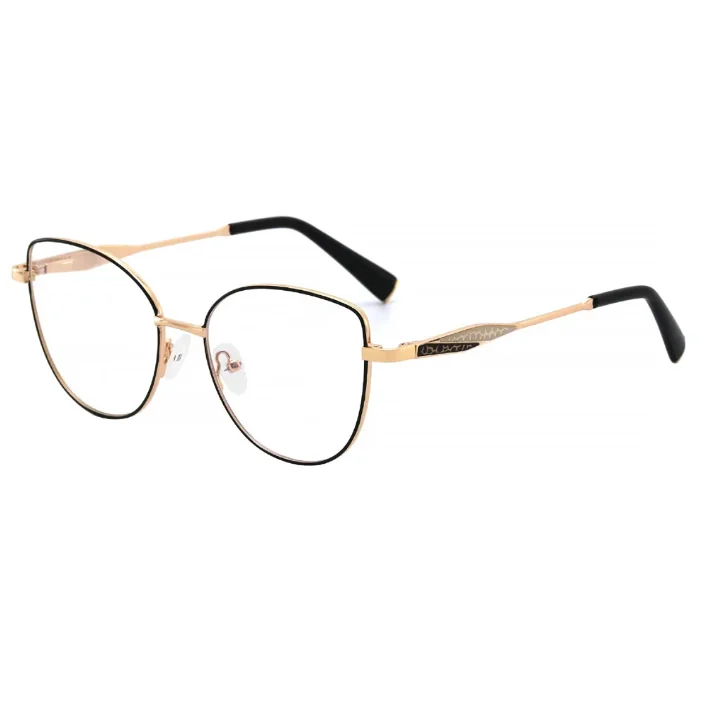
Lightweight PC or flexible plastic frames can support affordable pharmacy and corporate programs. Metal readers can provide a thinner, professional appearance and adjustable nose pads. Mixed-material and acetate-look frames can support higher retail positioning.
Material selection should follow the target price, weight, fit and durability requirements. “TR90,” “stainless steel” or “acetate” should appear in the controlled product specification and bill of materials; visual resemblance alone is not verification.
Frame material should be evaluated together with shape, weight and retail positioning. Buyers can compare ten commercially relevant reading glasses styles for seniors before building an office-reader assortment.
Should office readers use single-vision or multifocal lenses?
Single-vision near readers are simplest when the main task is close reading at a stable distance. Multifocal or progressive readers may support users who move between documents and a screen, but their viewing zones require clear instructions and careful power design.
Neither format suits every employee. Users with unequal prescriptions, astigmatism, persistent headaches or unresolved blur should obtain professional eye care rather than increasing an off-the-shelf power without assessment.
What frame features improve office usability?
Useful features include low finished weight, smooth nose contact, stable temple pressure, reliable hinges and enough lens height for the intended viewing zone. Spring hinges can improve opening tolerance but add components that must be inspected. Anti-slip temple details may help some designs but should not create pressure during long wear.
A B2B buyer should test complete samples during real desk tasks. Product photos cannot reveal pressure points, reflections, screen color shift or the usable viewing distance.
How should office buyers evaluate a supplier?
Use a supplier questionnaire that separates company-level capability from product-level proof. Ask for the factory profile, quality system, social audits where relevant, material specifications, lens reports, finished-product test reports, approved sample process, production lead time and inspection method.
For U.S. distribution, spectacle frames, spectacle lenses and magnifying spectacles remain subject to applicable FDA requirements even where a device category is exempt from 510(k) premarket notification. Buyers should confirm establishment, listing, labeling, impact-resistance and import responsibilities for the actual product and transaction.
Buyers that need repeatable quality across large retail programs can also review how pharmacy chains evaluate durable reading glasses, including hinges, lens retention, incoming inspection and batch consistency.
What should be included in an RFQ?
An RFQ should define frame model and material, lens type, near powers, spectral target, acceptable lens color, coating, frame dimensions, colors, logo, packaging, labeling, quantity by power and destination market. It should also state the requested sample stage, test documents and inspection standard.
Shanghai Jheyewear Co., Ltd. manufactures and exports B2B reading glasses, including private-label and OEM/ODM programs with optional blue-light-filtering lenses. Ready-stock logo orders start from 300 pieces for selected models; OEM/ODM reading-glasses programs typically start from 1,200 pieces per model, subject to the specification.
Buyers sourcing wholesale blue light reading glasses can request customized frame materials, reading powers, lens specifications, colors, logos and retail packaging from JHEYEWEAR.
Frequently asked questions
Q1: Are stronger blue-light filters always better for office readers?
No. A stronger filter can change lens color and visible-light transmission. The suitable specification depends on the product claim, cosmetic target, working environment and destination-market requirements.
Q2: Can a supplier prove blue-light performance with one percentage?
Not adequately. The percentage needs a wavelength range, test method and tested sample identity. A spectral curve or laboratory report provides more useful evidence.
Q3: What is the difference between blue-light readers and ordinary computer glasses?
Blue-light readers combine near or task-specific optical power with a filtering lens feature. “Computer glasses” is a broader retail term and may refer to non-powered lenses, near readers, intermediate-power lenses or prescription occupational lenses.
Q4: What claims should buyers avoid?
Avoid guaranteed claims that the product prevents retinal disease, cures digital eye strain or improves sleep unless the exact claim is supported by robust evidence and permitted in the destination market.