Cycling environments often change during a ride. Riders may experience different temperatures, speeds, and weather conditions within the same route. These factors can affect comfort and visual clarity, especially when heat and moisture build up around the face. For brands and distributors, understanding airflow design helps when selecting suitable cycling glasses for men for different riding scenarios.
Ventilation is not only about adding openings to a frame. It involves balancing airflow, lens coverage, and wearing comfort. A well-designed structure can help reduce moisture accumulation and support a clearer view during outdoor activities. This makes airflow an important consideration in the development and sourcing of cycling eyewear.
The Hidden Challenge Behind Clear Vision During Cycling
During cycling, the body produces heat, and sweat can collect around the forehead and nose area. When warm air stays between the face and the lens, it may create an uncomfortable wearing experience. Riders who spend long periods outdoors often pay attention to how well their eyewear manages internal air circulation.
Wind direction and riding speed also influence airflow around the glasses. At higher speeds, air pressure changes around the frame and lens area. If the design does not allow proper ventilation, moisture may remain near the lens surface and affect visibility.
For cycling eyewear suppliers, these practical riding conditions provide important references during product development. The design needs to consider both protection and ventilation instead of focusing only on appearance.
Different riding environments also create different airflow requirements. Mountain biking involves changing speeds and challenging terrain, while road cycling usually involves longer periods of steady movement. Gravel riding combines elements from both conditions, requiring eyewear that supports flexible outdoor use.
How Ventilation Structures Influence Lens Performance
The relationship between frame structure and airflow directly affects lens performance. Small ventilation areas near the lens can help guide air movement and reduce the chance of moisture staying inside the glasses. This design approach is commonly considered when developing outdoor sports eyewear.
Lens distance from the face is another factor that influences air circulation. A suitable gap between the lens and facial area allows air to move more naturally. This can improve comfort during extended riding sessions and reduce the feeling of heat buildup.
When businesses evaluate cycling glasses for men, they usually consider more than lens color or frame style. Ventilation design, material selection, and overall structure are also important parts of product evaluation. These details influence whether the eyewear matches different customer needs.
For professional buyers, understanding these design elements can support better product selection. Retailers and cycling brands need products that combine practical functions with market-friendly designs for different user groups.
Design Details That Support Different Riding Conditions
Material selection plays an important role in cycling eyewear design. Lightweight frames can reduce pressure during long rides, while durable lenses need to provide suitable protection for outdoor environments. These factors influence both product performance and user experience.
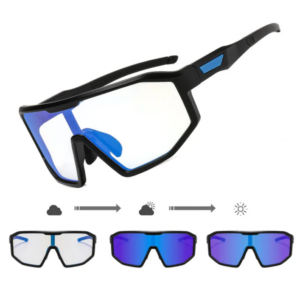
One shield-style cycling-glasses model with a photochromic lens option is developed with practical riding needs in mind. The glasses feature a lightweight TR90 frame, UV400 PC shield lens, adjustable nose pad, and wide coverage design. They are suitable for mountain biking, road cycling, and gravel riding applications.
The product uses a PC lens with UV400 and photochromic functions. The photochromic lens can adjust according to changes in light conditions, making it suitable for outdoor activities where riders may move between different environments. The adjustable nose pad also helps provide a more comfortable fit.
Customization is another factor considered by many business buyers. Frame colors, lens colors, logos, and private label packaging options allow brands to create products that match their market positioning. These options support companies that want to develop their own cycling eyewear collections.
From Product Development to Brand Customization Needs
For B2B buyers, selecting eyewear suppliers involves reviewing product quality, customization capability, and delivery plans. A stable supply process helps brands prepare products according to seasonal demand and market changes.
At JHEYEWEAR, we focus on providing eyewear solutions for business partners, including sunglasses, optical frames, and cycling eyewear products. Our OEM and ODM services support customers who need customized designs, logo applications, and private label packaging for their own brands.
Quality inspection is an important part of our production process. We pay attention to material selection, product appearance, and functional details before delivery. With more than 10 years of export experience, we understand the requirements of international customers in different markets.
Why Airflow Considerations Matter for Future Eyewear Selection
As cycling continues to attract more outdoor enthusiasts, eyewear design needs to respond to practical riding situations. Features such as ventilation, lens functions, and frame comfort all influence the overall product experience. Buyers should evaluate these elements when developing cycling-related product lines.
Ventilation should be assessed on the actual sample. Buyers can check the location of vents, the gap between lens and face, helmet compatibility, and whether airflow is maintained without exposing the eyes excessively to wind or debris.